
Corten Steel or Core 10 Steel? Outdoor Buyer’s Guide
Posted by Admin on 5th Aug 2026
What Is Corten Steel, and Is It the Same as Core 10 Steel?
"Core 10 Steel" is primarily a phonetic spelling used by people searching for Corten steel. The generic technical term is weathering steel.
COR-TEN® is a registered trademark rather than the generic name for every steel product that develops a rust-colored finish. SSAB, a licensed producer of COR-TEN steel, specifically recommends using terms such as "weathering steel" or "low alloy steel" when describing the broader material category.
This distinction matters when you are comparing products. A planter described as natural-rust steel may be manufactured from weathering steel, mild steel, or another steel alloy. Those materials may look similar after oxidation begins, but they should not automatically be assumed to have the same composition, thickness, corrosion behavior, or expected service life.
For an architectural or commercial project, ask for the actual material specification. ASTM A606/A606M, for example, covers sheet and strip steel with improved atmospheric corrosion resistance, but not every rusted product is necessarily manufactured to that specification.
Yard Couture offers custom metal planters in several materials and finishes, including Corten weathering steel, powder-coated aluminum, mild steel, and stainless steel. Material availability varies by design, so you should confirm the selected option on the individual product page.
How Corten and Core 10 Steel Develop Their Patina
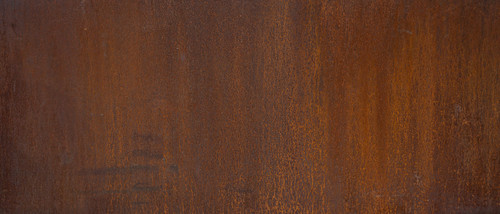
Corten does not arrive with one guaranteed rust color. Depending on the product and finish, the metal may initially appear gray, blue-gray, dark, raw, or partially weathered.
Once exposed to moisture and air, the surface begins oxidizing. Under suitable conditions, repeated wet and dry periods help form a tighter oxide layer that slows further atmospheric corrosion. The American Institute of Steel Construction explains the process simply: "Cycles of wetting and drying allow the patina to form."
The important phrase is wetting and drying. Weathering steel performs differently when it remains continuously damp, collects moisture-holding debris, or receives substantial chloride exposure. FHWA research notes that weathering steel forms a protective oxide under favorable wet and dry conditions, while aggressive environmental influences can interfere with that process.
Patina Development Timeline
Representative progression - actual timing and color vary by environment.
| Stage | Typical Appearance | Representative Timeframe | Notes |
|---|---|---|---|
| Raw / Fresh cut | Gray or dark metallic | Days to weeks | Surface may look dull or oily; initial oxidation not yet visible. |
| Initial oxidation | Light orange / patchy | Weeks to a few months | Runoff is most likely during this phase; color is often uneven. |
| Developing patina | Reddish-brown with darker patches | Several months to a year | Wet/dry cycles promote consolidation of the oxide layer. |
| Mature patina | Deep brown, umber, sometimes near-black in sheltered areas | 1-5+ years | Appearance stabilizes under suitable exposure; sheltered areas may remain darker. |
Expect the Color to Change
The initial oxidation may look orange or uneven. Over time, it can deepen into reddish brown, dark brown, or umber tones. Welds, seams, shaded areas, irrigation paths, and sheltered sides may weather at different rates.
That variation is part of the material's appeal. If you need every planter or fire feature to match a precise architectural color, review Yard Couture's planter finish options and consider powder-coated aluminum instead. Yard Couture currently offers powder-coated products in standard colors and discusses custom color matching, subject to the selected product and current availability.
You should not assume that a homemade acid, salt, or vinegar treatment is appropriate for your product. Accelerated weathering can produce uneven coloration, excessive runoff, residue, or corrosion. Ask whether the manufacturer offers an approved pre-weathered finish before applying any chemical treatment.
Where Core 10 Steel Works Best Outdoors
Corten is most successful when its appearance, drainage requirements, weight, and natural runoff complement the project.
Custom Metal Planters
Corten planters work particularly well when the container is intended to serve as an architectural element rather than disappear into the landscape. Rectangular planters can define a dining area, tall planters can create screening, and repeated cubes or cylinders can establish a consistent rhythm along an entrance.
The material pairs naturally with concrete, gravel, stone, ornamental grasses, evergreen plants, dark siding, and contemporary architecture. It can also provide a warm visual counterpoint to glass, steel, and minimalist hardscaping.
You still need to consider practical details such as drainage openings, irrigation, soil volume, access, and the combined weight of the planter, soil, retained water, and mature plant material.
Raised Garden Beds
Bottomless Corten beds create a defined garden edge while allowing roots to extend into the ground beneath the bed. Yard Couture's raised planter bed collection currently includes rectangular, square, round, L-shaped, U-shaped, tiered, and modular configurations. The company also identifies Corten steel and powder-coated aluminum as material choices for many raised-bed designs.
Choose the bed height based on gardening access, desired soil depth, surrounding pathways, and the plants you intend to grow. You should also plan irrigation before filling a large bed. Retrofitting water lines after several cubic feet of soil have been installed is considerably more difficult.
Fire Pits, Fire Tables, and Fire Bowls
Corten can be used for purpose-built gas and wood-burning fire features. Yard Couture's current fire-pit collection includes products made from Corten weathering steel, powder-coated aluminum, stainless steel, copper, GFRC concrete, and other materials. Available configurations include natural gas, liquid propane, and wood-burning models.
The body material is only one part of a fire feature. You must also evaluate the burner, fuel type, ignition system, ventilation, controls, fire media, accessory compatibility, drainage, and required clearances.
Wood-burning products add another set of considerations, including ash removal, embers, sparks, accumulated rainwater, local burn restrictions, and the effect of direct heat on the interior of the bowl.
Corten Steel Compared With Other Outdoor Materials
No outdoor material is best for every project. Your decision should reflect the appearance you want, the installation environment, structural limits, maintenance expectations, and surrounding surfaces.
Corten versus Powder-Coated Aluminum
| Feature | Corten Weathering Steel | Powder-Coated Aluminum |
|---|---|---|
| Appearance | Evolving orange, brown, and umber patina | Consistent color with clean lines |
| Weight | Heavy - solid, durable presence | Lightweight - easier handling |
| Staining Potential | High - rust runoff possible during patina development | Low - will not produce rust stains |
| Color Consistency | Variable - color changes and may be uneven | High - uniform color across units |
| Coastal Suitability | Site review recommended (chlorides accelerate corrosion) | Generally favorable - corrosion-resistant |
| Maintenance | Low paint maintenance; manage drainage, debris, and runoff | Moderate - recoating if scratched; clean occasionally |
| Customization | Good - cut, welded, formed; finishes vary | Excellent - many colors and profiles available |
| Often Suited For | Planters, raised beds, edging, screens, fire features | Rooftops, balconies, coastal projects, pale patios |
Other Common Outdoor Materials
| Material | Best For | Key Advantage | Key Limitation |
|---|---|---|---|
| Mild steel | Decorative planters, sheltered projects | Fabrication flexibility, lower cost | Not equivalent to weathering steel; may need coatings |
| Stainless steel | Commercial, coastal, fire components | Corrosion resistance, clean finish | Higher cost; fingerprints and marks may show |
| Copper | Statement planters, water features | Distinctive living finish, sculptural | Premium cost; color changes over time |
| GFRC concrete | Fire tables, large planters, hospitality | Visual mass, multiple textures | Heavy; potential chipping; check freeze-thaw spec |
Choose Corten when you want a naturally changing surface and are comfortable with visual variation. Choose powder-coated aluminum when low weight, consistent color, coastal exposure, rooftop placement, or protection of light-colored hardscaping is the higher priority.
Yard Couture describes aluminum as a lightweight option for corrosive environments, roof terraces, and surfaces where staining is a concern. Exact alloy, gauge, powder-coat system, and color availability should be confirmed for the product you are ordering.
Corten Versus Mild Steel
Mild steel can produce a similar natural-rust appearance, but you should not purchase based on color alone. Ask what metal is being supplied, how thick it is, whether it is intended for continuous outdoor exposure, and what warranty applies.
A lower-priced rusted-steel product may still be appropriate for your project, but it should not be represented as equivalent to specified weathering steel without documentation.
Corten Versus Stainless Steel, Copper, and GFRC
Stainless steel is often preferable when you want a clean metallic appearance or greater resistance to chloride exposure. Copper provides another living finish, although its color evolution differs considerably from weathering steel. GFRC offers visual weight and a masonry-like appearance without the thin profiles associated with fabricated sheet metal.
The best material is the one that resolves the actual site constraints, not simply the one that looks best in a close-up product photograph.
Outdoor Material Selection Flowchart
| # | Question | If Yes | If No |
|---|---|---|---|
| 1 | Is low weight required? | Consider powder-coated aluminum. Go to #3. | Corten, GFRC, or mild steel remain options. Go to #2. |
| 2 | Is the site coastal or exposed to deicing salts? | Favor aluminum, stainless, or GFRC. Corten requires site review. | Corten or mild steel remain options if runoff is acceptable. |
| 3 | Is rust runoff acceptable near adjacent surfaces? | Corten or mild steel are viable if drainage is managed. | Choose aluminum, stainless, copper, or GFRC. |
| 4 | Do you need an exact, consistent color? | Powder-coated aluminum or painted GFRC. | Corten or copper for evolving finishes. |
| 5 | Is the product a planter or a fire feature? | Planter: Check filled weight, drainage, irrigation routing. | Fire feature: Confirm burner, clearances, and fuel system design. |
Will Corten Steel Stain Concrete or Pavers?
Corten and other natural-rust steel products can release rust-colored runoff, particularly while the surface is developing. Yard Couture cautions that natural-rust products may transfer color to light or porous surfaces and are not recommended where staining is a concern.
Before ordering, examine what sits beneath and beside the product:
- Light concrete or limestone
- Pool coping
- Porous pavers
- Stucco walls
- Wood or composite decking
- Finished rooftops
- Waterproof membranes
- Drainage channels
Rust Runoff Placement - Risk and Drainage Guidance
| Surface / Area | Risk Level | Recommended Action |
|---|---|---|
| Gravel or permeable soil | Low | Preferred runoff destination. Place planters so natural runoff drains here. |
| Light-colored concrete | High | Avoid direct placement. Use trays, elevated feet, or choose non-rusting material. |
| Pool coping and pool decks | High | Do not place Corten adjacent to pool coping unless a controlled drainage plan is in place. |
| Porous pavers | Moderate-High | Can stain; direct runoff toward gravel beds or install protective trays. |
| Stucco or pale siding | High | Keep Corten at a distance or provide splash guards and regular cleaning access. |
| Covered patios (protected from rain) | Moderate | Sheltered areas may show darker, uneven weathering; consider controlled finishes. |
You may be able to direct drainage toward gravel, soil, or a controlled runoff location. Product-specific feet, risers, drainage accommodations, or trays may also help, but you should confirm compatibility before ordering.
Do not assume that sealing the steel will permanently stop runoff. A coating can change the appearance and maintenance requirements of a living finish. Where staining is unacceptable, powder-coated aluminum, stainless steel, copper, or GFRC may be a more predictable choice.
Climate and Exposure Considerations
Corten needs enough atmospheric exposure to weather, but it also needs opportunities to dry.
A planter that receives routine rain and then dries may behave differently from one that remains wet because of clogged drains, irrigation overspray, wet leaves, standing water, or direct contact with moisture-holding soil.
Chlorides also deserve attention. Salt air, deicing salts, pool chemicals, and salt-laden road spray can create more aggressive corrosion conditions. FHWA research has documented degradation of protective weathering-steel oxides under elevated chloride exposure.
There is no single national distance from the ocean that makes Corten suitable or unsuitable. Coastal exposure depends on wind, salt concentration, rainfall, shelter, orientation, cleaning, and the exact product design. A material specialist or manufacturer should evaluate unusual or highly corrosive sites.
In dry climates, patina development may be slower or less uniform. Under covered patios, the protected side may remain darker or less weathered than the exposed side. If that variation would look like a defect in your project, use a controlled finish instead.
Climate and Exposure Matrix
| Exposure Type | Recommendation | Notes |
|---|---|---|
| Dry inland climates | Generally favorable | Patina develops more slowly but evenly if dry/wet cycles exist. |
| Humid climates | Site review recommended | Continuous moisture can prevent protective patina formation. |
| Freeze-thaw regions | Generally favorable | Ensure drainage and avoid trapped water that can freeze against seams. |
| Coastal areas | Site review recommended | Salt exposure accelerates corrosion; consider aluminum or stainless. |
| Pool environments | Consider an alternative material | Chlorides and splashing increase risk of accelerated corrosion and staining. |
| Covered patios | Site review recommended | Sheltered sides may remain darker; consider controlled finish if uniformity required. |
| Deicing-salt exposure | Consider an alternative material | Salt-laden spray or runoff is aggressive to weathering steel. |
Anatomy of a Corten Planter
| Component | Description |
|---|---|
| Top rim / finished edge | Visible architectural edge; may be rolled or squared depending on style. |
| Drainage openings | Factory or field-installed holes near the bottom; size and number determine drainage rate and delivery of runoff. |
| Internal liner or tray (optional) | Protects soil from direct contact with steel and reduces staining/drainage issues; verify compatibility before ordering. |
| Optional feet or casters | Elevate the planter to allow runoff to clear the finished surface and improve airflow beneath the unit. |
| Irrigation routing | Conduits or access ports for drip lines; plan routing before planting. |
| Soil volume / planting depth | Internal dimensions determine soil capacity and the weight when filled; calculate filled weight for site logistics. |
| Finished grade and overflow path | Planned slope or channel to direct runoff to gravel, drains, or planting beds. |
| Expected runoff path | The route rust-colored water will take during patina development; avoid direct runoff onto light-colored surfaces. |
Sizing, Customization, and Installation Planning
Begin with the complete installation area, not only the desired product dimensions.
Measure doors, gates, stairs, elevators, walkways, loading areas, overhangs, and turns along the delivery route. A planter that fits its final location may still be impossible to move through a narrow gate.
For planters, account for:
- Filled operating weight
- Drainage direction
- Irrigation access
- Planting depth
- Root space
- Maintenance access
- Structural support on decks or rooftops
For fire features, account for:
- Fuel supply
- Electrical requirements for applicable ignition systems
- Control access
- Ventilation
- Burner servicing
- Clearances
- Seating circulation
- Wind exposure
Yard Couture identifies custom dimensions, materials, finishes, drainage, casters, lighting, and other options across its planter pages, but not every option is available for every model. Review the company's custom planter extras and confirm the exact configuration before ordering.
Large planters and fire features may require a pallet jack, forklift, crane, lifting straps, additional labor, or temporary site access. Plan the receiving process before the shipment leaves the manufacturer.
Planter and Fire-Pit Measurement Checklist
Print or use onsite. Check each item before confirming an order.
| ☐ | Product model and SKU |
| ☐ | Material type and specification (e.g., ASTM A606/A606M) |
| ☐ | Product external dimensions (L x W x H) |
| ☐ | Internal dimensions and soil depth |
| ☐ | Filled weight estimate (soil + water + plants) |
| ☐ | Gate and door clearances along delivery route |
| ☐ | Stair/elevator capacity and route dimensions |
| ☐ | Required receiving equipment (forklift, pallet jack, crane) |
| ☐ | Drainage provisions and direction of runoff |
| ☐ | Irrigation routing and access points |
| ☐ | For fire features: fuel type, burner size, gas line entry point |
| ☐ | For fire features: electrical service for ignition components |
| ☐ | Clearance requirements and seating circulation |
| ☐ | Structural support verification for decks/rooftops |
| ☐ | Site contact and delivery timing |
| ☐ | Receiving location and temporary storage plan |
| ☐ | Access to tools and personnel for onsite assembly |
| ☐ | Inspection plan for finish, welds, and drains at installation |
Fire Safety and Code Planning
A Corten fire pit must be treated as a fuel-burning appliance or open-fire product, not simply as outdoor furniture.
Follow the listed product instructions and the burner manufacturer's requirements. Natural-gas and propane lines should be designed and installed by an appropriately licensed professional. Local fire, fuel-gas, building, and property regulations may affect placement, permits, shutoffs, ventilation, and allowable fuel types.
NFPA advises: "Only use fire pits outdoors and at least 10 feet (3 meters) from anything that can burn." It also recommends checking local restrictions and placing the fire pit on level, noncombustible ground.
Treat that distance as general safety guidance, not a substitute for the product manual. A specific appliance, overhead structure, commercial installation, or local code may require different or greater clearances.
For wood-burning models, use an appropriately sized spark screen when required or recommended, manage ash carefully, and never use gasoline to start or relight the fire. Yard Couture offers fire-pit lids, burner components, screens, and accessories, but compatibility must be checked against your fire-pit model.
Care and Long-Term Outdoor Performance
Corten usually avoids the repainting associated with coated carbon steel, but it still benefits from basic care.
Keep planter drains open. Remove wet leaves, soil buildup, ash, and debris that can hold moisture against the metal. Check fire bowls for standing water and follow the manufacturer's instructions for covers, burner care, ignition components, and winterization.
Do not assign a universal lifespan to every Corten product. Long-term performance depends on the actual steel specification, material thickness, fabrication quality, drainage, exposure, chloride concentration, weld design, operating heat, and maintenance.
A gas burner, ignition system, valve, hose, lid, or cover may also have a different service life and warranty from the Corten body. Review each component separately.
What Determines the Cost of a Corten Steel Product?
Corten pricing is influenced by more than the exterior length and width.
Important cost factors include material type, steel thickness, shape, weld complexity, reinforcement, custom dimensions, drainage details, planter accessories, burner size, ignition system, fuel configuration, fire media, lids, spark screens, packaging, freight, and installation equipment.
Simple rectangular forms are generally easier to fabricate than curved, tapered, faceted, or unusually large products. Custom products can also require engineering review, drawings, special packaging, or phased commercial delivery.
Avoid comparing two products solely by their photographs. Ask what is included, what is optional, how the product is constructed, and what work must be completed on site.
Common Corten Steel Buying Mistakes
Assuming Every Rusted Product Is Corten
Confirm the actual base material and specification. Natural-rust mild steel and weathering steel are not automatically interchangeable.
Expecting a Uniform Brown Finish on Delivery
Raw weathering steel may arrive gray or only partially oxidized. Natural patina develops according to exposure, and the process is rarely perfectly uniform.
Ignoring Runoff
Plan for rust-colored water before placing Corten on pale concrete, pool decking, stucco, or finished rooftop surfaces.
Choosing by Appearance Without Reviewing the Climate
A coastal, salt-exposed, continuously damp, or poorly drained site may favor another material.
Ordering Before Checking Access
Confirm the complete delivery route, equipment needs, site readiness, and operating weight before approving a large product.
Treating Gas and Wood-Burning Fire Pits as the Same Installation
Fuel lines, ignition systems, ash, sparks, ventilation, controls, and local restrictions create different planning requirements.
Assuming a Custom Product Can Be Easily Returned
Confirm current production, cancellation, return, damage-claim, shipping, and warranty policies before approving a made-to-order configuration.
Questions to Ask Before Ordering
- Is the product made from specified weathering steel, COR-TEN, mild steel, or another material?
- What material thickness is used for this size and application?
- Will the product arrive raw, partially weathered, or pre-weathered?
- Could runoff stain the intended surface?
- Is the material suitable for the site's salt, moisture, irrigation, and freeze-thaw exposure?
- What drainage provisions are included?
- What will the planter weigh after it is filled?
- Which dimensions, materials, finishes, and accessories can be customized?
- What equipment and labor will be required at delivery?
- For a fire feature, what fuel, burner, ignition, ventilation, and clearance requirements apply?
- Which components are included, and which must be ordered separately?
- What current warranty, production, freight, cancellation, and return terms apply?
Is Corten Steel the Right Choice for You?
Corten may be the right material when you want a substantial architectural product with a warm, naturally evolving finish. It works especially well where rust-colored runoff can be managed, drainage is reliable, and visual variation is part of the design.
Powder-coated aluminum may be the stronger choice when you need lower weight, exact color, cleaner placement on pale surfaces, or greater confidence in a salt-exposed environment. Stainless steel, copper, mild steel, and GFRC each solve different aesthetic and performance priorities.
Frequently Asked Questions
Is Core 10 Steel the same as Corten steel?
Core 10 Steel is a common search spelling for Corten or COR-TEN weathering steel. It is not a separate metal grade; the generic technical term is weathering steel.
Does Corten steel rust?
Yes. It intentionally develops an oxide layer (patina) that can slow further atmospheric corrosion when wet/dry cycles and exposure conditions are suitable.
Will Corten steel stain concrete?
It can. Rust-colored runoff may discolor concrete, stone, pavers, stucco, decking, and other light or porous surfaces, especially during early patina development.
Where is Corten steel commonly used?
Typical outdoor applications include architectural planters, raised garden beds, landscape edging, fire pits, fire bowls, screens, and custom landscape features.
Is Corten steel maintenance-free?
No material is completely maintenance-free. Corten generally does not require painting, but you must manage drainage, debris, moisture, and product-specific care.
Is Corten better than powder-coated aluminum?
It depends on the site. Corten offers a naturally changing rust patina; aluminum is lighter, more color-consistent, and better where rust runoff or chloride exposure is a concern.
Can you use Corten steel for a fire pit?
Yes, when the product is designed and manufactured as a fire pit. Burner safety, clearances, fuel requirements, and code compliance depend on the full appliance, not only the exterior material.
Your best next step is to compare the material against the actual installation conditions, not just the appearance you prefer. Browse Yard Couture's metal planters, raised beds, and fire-feature collections, or contact Yard Couture about product selection or a custom project. Bring your dimensions, site photographs, surface materials, delivery constraints, and preferred application so the available options can be evaluated accurately.