
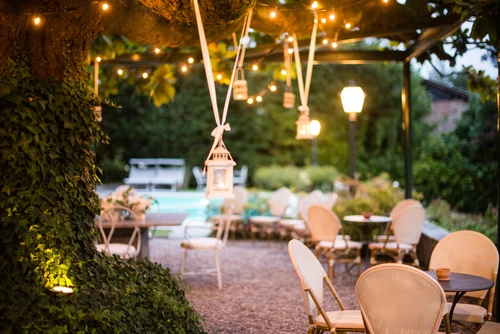
Garden Decor Tier List For Your Home : What Is Actually Worth Buying?
Posted by Admin on 14th Aug 2026
TL;DR: Quick Answers
- What garden decor makes the biggest difference? Large architectural planters and well-planned fire features earn S Tier because they can become focal points while also serving a practical purpose.
- How do you keep garden decor from looking cluttered? Start with one dominant feature, establish furniture and circulation, then add smaller accents. A few correctly scaled pieces usually create a stronger design than many unrelated decorations.
- Should you buy large planters or several small pots? For entrances, patios, commercial spaces, and modern landscapes, fewer substantial planters often create stronger visual structure. Smaller pots still work well for seasonal accents and compact gardens.
- Does planter drainage really matter? Yes. Containers need a way for excess water to leave the root zone. You also need to consider where that drainage water will go once it leaves the planter.
- Is a fire pit good garden decor? It can be one of the strongest outdoor focal points, but placement, fuel, clearances, wind, local fire restrictions, and manufacturer instructions matter more than appearance.
- What should you buy first for an unfinished patio? Identify what the space is missing. If it lacks structure, start with planters. If it lacks a gathering area, consider seating or a fire feature. If it lacks movement and sound, a water feature may have greater impact.
- Should all garden decor match? No. Aim for coordination rather than exact matching. Repeating a few materials, colors, shapes, or finishes can make different products feel intentionally connected.
There is no shortage of garden decor you can buy, but adding more objects does not automatically create a better garden. The pieces that usually have the greatest impact are the ones that help organize the space, create a focal point, solve a practical problem, or make the outdoor area more usable.
Questions that repeatedly appear in landscaping forums and outdoor-living discussions are less about finding another decorative object and more about figuring out scale, placement, circulation, planter drainage, fire-pit location, and how to make a patio feel intentionally designed. One recent Houzz patio discussion, for example, centered on making an attractive patio feel more cohesive, with suggestions focusing on furniture flow and strategically placed large planters rather than simply adding more accessories.
That is the logic behind this tier list. We are ranking outdoor decor by overall design impact, functionality, durability, flexibility, maintenance requirements, and long-term usefulness. Your personal rankings may change depending on how you use your property.
How This Garden Decor Tier List Works
An S Tier product is not automatically right for every home. Instead, S Tier means the category has unusually strong potential to influence both the appearance and function of an outdoor space.
A fire pit, for example, can completely organize a patio around a central gathering point. It is still a poor choice if you cannot safely position it, provide the proper fuel connection, or comply with the product's installation instructions.
The same applies to planters. A pair of substantial architectural planters can transform an entrance, but oversized containers can become an obstacle if you fail to account for circulation or filled weight.
Landscape designer Simon Orchard makes a useful point in a Houzz discussion about planning outdoor spaces: "Before getting carried away with planting or paving ideas, be clear what the space will be used for." That principle applies equally well to outdoor decor. (Houzz)
Start with function, then determine what deserves to become the focal point.
S Tier Garden Decor: Architectural Metal Planters
Large planters are some of the most versatile outdoor design elements because they are both decorative and functional.
You can use them to frame an entrance, divide a dining area from a lounge, create privacy along a patio, soften large expanses of hardscape, establish repetition along a commercial building, or introduce plants where in-ground planting is not practical.
Yard Couture's collection of custom metal planters includes rectangular, square, round, cylinder, cube, taper, orb, cone, column, and other configurations in materials including Corten weathering steel, powder-coated aluminum, mild steel, and stainless steel. Current options vary by product.
Why Large Planters Rank So Highly
Scale is one reason.
A group of six small pots may add color, but two properly proportioned architectural planters can establish a much stronger relationship with a large front door, retaining wall, outdoor dining area, or commercial facade.
Planters can also perform jobs that smaller decorations cannot. A tall rectangular planter can provide screening. A long planter can define circulation. A series of identical containers can visually connect different areas of a property.
This is also where restraint matters. If every available corner contains a different planter shape, color, and material, the collection can begin to feel accidental. Select a consistent family of forms or finishes, then let the plants provide variation.
Do Outdoor Planters Need Drainage?
In most planted applications, yes. University of Minnesota Extension notes that outdoor containers need drainage holes so excess water can escape. Utah State University Extension similarly emphasizes the importance of drainage and soil structure in raised and container gardening.
You should think one step beyond the drain hole, however. Where will that water go?
On gravel or soil, the answer may be simple. On limestone, pale concrete, a rooftop membrane, or a finished commercial entrance, runoff may affect surrounding materials or create maintenance problems.
Yard Couture also offers selected planter customization and extra options, including drainage-related configurations, casters, and other additions on applicable planter designs. Confirm compatibility with your specific model before ordering.
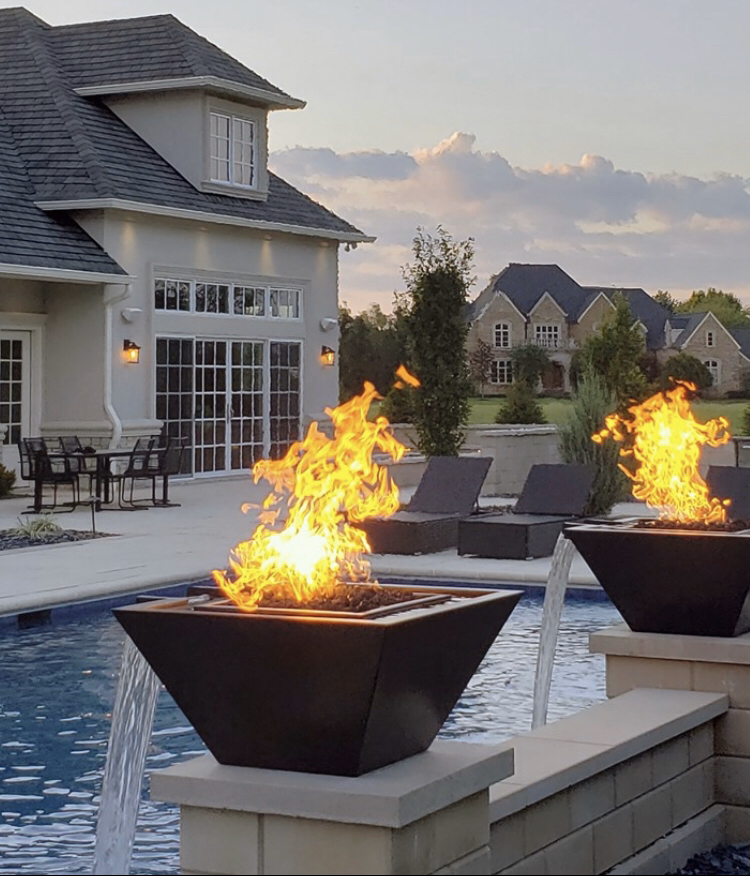
S Tier Garden Decor: Fire Pits and Fire Tables
A properly planned fire feature can become the visual and social center of an outdoor living space.
That dual purpose pushes fire pits into S Tier. Even when the flame is off, a strong fire table or sculptural bowl can anchor a furniture arrangement. When it is operating, it changes how people gather around the space.
Yard Couture's outdoor fire pit collection currently includes gas fire pits, wood-burning models, fire tables, and fire bowls in materials such as GFRC concrete, Corten weathering steel, hammered copper, stainless steel, and powder-coated aluminum. Fuel, burner, ignition, accessory, and customization options differ by model.
Gas Versus Wood-Burning Fire Features
Gas fire pits tend to provide a more controlled operating experience and can be configured for natural gas or propane on applicable products. Wood-burning products provide the traditional flame, embers, and wood-fire experience, but they also involve ash, sparks, firewood storage, and different local restrictions.
Your first decision should therefore be how you intend to use the fire feature, not which bowl looks best.
Gas systems may require professional fuel-line and electrical coordination depending on the ignition system. Wood-burning products need appropriate spark control, ash management, and compliance with local burning restrictions.
Fire Safety Comes Before Tier Ranking
General safety guidance is useful, but product instructions and local requirements take precedence.
The U.S. Fire Administration advises: "Use chimneys, outdoor fireplaces and fire pits outdoors at least 10 feet away from your home or anything that can burn." It also recommends a metal screen over wood-burning fires to help control sparks. (U.S. Fire Administration)
Local rules can be more restrictive. Manufacturer requirements may also specify different clearances based on the product, fuel, overhead conditions, and installation.
The Consumer Product Safety Commission further advises never using gasoline to start or restart a backyard fire and recommends keeping a hose or fire extinguisher nearby. (CPSC)
A Tier: Water Features and Fire Features
Water features can have enormous visual impact because they introduce something static decorations cannot: movement and sound.
A water bowl can soften a pool deck. A stainless or copper scupper can turn a retaining wall into a focal point. A fountain can help give a courtyard an identity even where planting space is limited.
Yard Couture's water and fire feature collection includes water bowls, scuppers, spillways, fire bowls, and combined fire-and-water products in materials that currently include copper, GFRC concrete, Corten weathering steel, and stainless steel.
So why A Tier instead of S Tier?
Installation and maintenance.
Depending on the design, you may need to consider water supply, pumps, electrical service, drainage, splash patterns, mineral accumulation, basin access, winterization, and serviceability. A feature that looks effortless after installation may require considerably more planning behind the wall or beneath the hardscape.
That does not reduce its design value. It simply makes it more site-dependent.
A Tier: Premium Outdoor Furniture
Outdoor furniture occupies an interesting position in a garden decor tier list because it is primarily functional, but visually it can dominate a patio.
A poorly scaled furniture arrangement can make even excellent landscaping feel awkward. A strong arrangement can make a relatively simple patio feel complete.
Yard Couture carries outdoor patio furniture including dining sets, tables, chairs, chaise lounges, sofas, and related seating from outdoor furniture manufacturers.
When selecting furniture, think in zones rather than individual pieces.
A dining table needs comfortable circulation around occupied chairs. A conversation area should feel connected without blocking major paths. Seating around a fire feature needs to account for the fire product's required clearances and operating conditions.
One recurring theme in patio-design forums is that furniture can easily block flow even when each individual piece fits within the patio footprint.
The tape measure therefore matters more than the product photograph.
A Tier: Raised Garden Beds
For a garden-centered property, raised beds could easily move into S Tier.
They give planting areas architectural structure while also creating controlled growing zones for vegetables, herbs, flowers, and ornamental plants.
Yard Couture's raised metal garden beds currently include rectangular, square, round, L-shaped, U-shaped, tiered, and modular configurations, with Corten steel and powder-coated aluminum available across applicable products.
Utah State University Extension explains that "Raised beds can be used when native soils have poor drainage, are compacted, or are otherwise difficult to manage." (Utah State University Extension)
The important design consideration is accessibility. You should be able to reach the planting area without constantly stepping into the bed. USU commonly recommends limiting beds to roughly 3 to 4 feet in width when access is available from both sides, although your exact layout should reflect the plants, site, and users.
B Tier: Landscape Edging
Landscape edging rarely becomes the hero of the garden, but good edging can make everything around it look more intentional.
It creates crisp transitions between gravel, turf, planting beds, pathways, and other materials. In minimalist landscapes, Corten steel edging can even become a visible design line.
It stays in B Tier only because its impact is usually supportive rather than dominant.
If the garden feels messy because its boundaries are unclear, however, edging may improve the space more than another decorative object.
B Tier: Patio Heaters
Patio heaters are more functional than decorative, which is why they fall into B Tier for garden decor.
That does not mean they have low outdoor-living value.
In a climate where evenings become cool well before you are ready to go inside, heating can materially extend patio use. The challenge is integrating the equipment without compromising circulation or creating conflicts with combustible materials or overhead structures.
Follow the exact manufacturer's installation and operating requirements. Do not assume that placement rules for one heater apply to another model.
B Tier: Outdoor Grills and Cooking Features
A grill might be one of the most important objects on your patio if you cook outside several nights a week. From a garden decor perspective, though, it is primarily equipment.
For that reason, grills land in B Tier here even though they could be S Tier in an outdoor-living functionality ranking.
The design priority should be integrating cooking into the larger space. Consider ventilation, prep space, dining proximity, utility connections, grease management, storage, and safe separation from combustible materials.
If outdoor cooking is a major part of the project, it deserves its own planning process rather than being treated as decorative furniture.
B Tier: Benches, Umbrellas, and Shade Elements
A bench can create a destination in a garden. An umbrella can visually establish a dining zone while providing shade. Neither usually transforms an entire property alone, but both can improve how an existing garden functions.
This is where supporting pieces become valuable.
If your S Tier fire pit already establishes the focal point, you may not need another major statement feature. A bench at the edge of the garden, a coordinated umbrella, and thoughtfully placed planting may provide the final layer.
C Tier: Small Ornaments, Seasonal Decorations, and Trend Pieces
C Tier is not a criticism of personal taste.
Garden statues, decorative stakes, small sculptures, seasonal signs, lanterns, novelty pieces, and temporary accents can make a garden feel personal. The limitation is that they typically contribute less to structure, function, and long-term design than larger architectural pieces.
The most common mistake is using too many of them.
When every step, planting bed, table, and fence has its own decorative object, your eye has nowhere to rest.
Use small decor to reinforce the larger design. If the major materials are weathered steel, warm wood, gray stone, and green planting, a few accents that repeat those colors or textures will generally feel more deliberate than unrelated objects spread throughout the yard.
Garden Decor Material Comparison
Material choice can change both the look of an outdoor product and the way you maintain it.
| Material | Appearance | Major Advantage | Main Consideration | Common Outdoor Uses |
|---|---|---|---|---|
| Corten weathering steel | Rust-colored patina that changes with exposure | Strong architectural character | Runoff, moisture patterns, chloride exposure | Planters, raised beds, edging, fire features |
| Powder-coated aluminum | Consistent colored finish | Lightweight and corrosion resistant | Coating condition and finish care | Planters, fire pits, furniture |
| Mild steel | Raw, coated, or naturally rusted | Fabrication flexibility | Continued corrosion if left unprotected | Planters, edging, decorative metalwork |
| Stainless steel | Clean metallic surface | Strong corrosion resistance | Cost, grade selection, surface cleaning | Water features, planters, fire components |
| Copper | Warm metal that develops a changing patina | Distinctive living finish | Cost and color variation | Water bowls, fire bowls, planters |
| GFRC concrete | Substantial concrete appearance | Architectural mass with less weight than conventional solid concrete products | Handling, surface care, product-specific exposure requirements | Planters, fire tables, water features |
Corten deserves additional consideration in wet or chloride-heavy environments. Federal Highway Administration research on structural weathering steel shows that the development of its protective oxide depends on environmental conditions, including opportunities for wet and dry cycling, and that aggressive chloride exposure can impair the protective patina. Those bridge studies should not be treated as planter specifications, but they illustrate why you should not assume every weathering-steel product performs identically in every microclimate.
How to Choose What Garden Decor to Buy First
Instead of shopping by category, diagnose the space.
If the Garden Lacks Structure
Start with planters, raised beds, edging, or another architectural element.
These establish boundaries and create a framework for plants and furniture.
If the Patio Lacks a Gathering Point
Start with furniture or a properly planned fire feature.
Choose one as the dominant element and make the other support it.
If the Space Feels Static
A water feature can introduce movement and sound that another planter or chair cannot.
If the Space Feels Cluttered
Do not buy anything yet.
Remove or regroup some of what you already have. Look for inconsistent scales, blocked paths, too many competing focal points, and small accessories that could be consolidated.
Then decide whether one larger feature can organize the composition.
Getting the Scale Right
One of the easiest ways to make expensive garden decor feel disappointing is to choose the wrong size.
A planter that looks substantial in an isolated online photograph may appear tiny beside a two-story entry. A fire table that looks appropriately dramatic in a large showroom can overwhelm a compact courtyard.
Use permanent architecture as your reference:
- Door height and width
- Window proportions
- Retaining walls
- Patio dimensions
- Pool dimensions
- Rooflines
- Existing furniture
- Major planting masses
Also consider the object's operational footprint.
A chair takes up more room when someone pulls it away from a table. A mature plant becomes wider than its planter. A fire feature needs more surrounding space than the physical dimensions of the bowl.
Installation Planning Is Part of the Design
Before ordering a large planter, fire pit, water bowl, or piece of furniture, trace the entire path from delivery vehicle to final location.
Check gates, stairs, elevators, narrow side yards, overhead obstructions, slopes, finished landscaping, and tight turns.
Also consider installed weight.
A large planter becomes considerably heavier once it contains soil, water, and mature plants. GFRC products, large fire features, and commercial furnishings may also require multiple people or mechanical equipment to position.
For decks, balconies, and rooftops, do not guess at structural capacity. When loading is uncertain, have the supporting structure evaluated by the appropriate building professional.
What Makes Premium Garden Decor More Expensive?
Product cost usually reflects more than size.
Depending on the category, price can be influenced by material, thickness, fabrication complexity, finish, custom dimensions, welding, powder coating, burner systems, ignition controls, fire media, pumps, accessories, upholstery, packaging, and freight.
Installed project cost can be very different from product cost.
A planter may require soil and lifting equipment. A water feature may require plumbing and electrical coordination. A natural-gas fire pit may require a professionally installed fuel line. A commercial project may require drawings, anchoring, phased delivery, or site-specific review.
This is why comparing two products only by retail price can be misleading.
Common Garden Decor Mistakes
Buying Too Many Small Pieces
Small decor feels inexpensive individually, but a large collection can cost more while producing less visual impact than one correctly scaled focal piece.
Decorating Before Planning Circulation
People still need to move comfortably between doors, furniture, grills, pools, stairs, and garden paths.
Ignoring Drainage
A planter or raised bed is part of a water-management system whether you intended it to be or not.
Choosing Materials Only by Appearance
Climate, salt, irrigation, weight, maintenance, and surrounding surfaces can be just as important as color.
Adding Multiple Competing Focal Points
A sculptural fountain, bright furniture set, oversized fire feature, dramatic planter grouping, and numerous ornaments may each look good individually but compete when placed together.
Treating Fire Features Like Ordinary Furniture
Fire introduces requirements that decorative objects do not. Follow the manufacturer instructions, local requirements, fuel-system guidance, and applicable fire restrictions.
Forgetting About Delivery
If the product cannot fit through your gate or reach the roof terrace, its design quality is irrelevant.
Garden Decor Tier List at a Glance
| Tier | Garden Decor | Why It Ranks Here |
|---|---|---|
| S | Architectural metal planters | Strong visual impact, highly flexible, useful for planting, screening, and space definition |
| S | Fire pits and fire tables | Combines a major focal point with gathering and heat |
| A | Water features | Exceptional movement, sound, and visual interest, but greater installation and maintenance |
| A | Premium outdoor furniture | Determines how the outdoor room looks and functions |
| A | Raised garden beds | Combines garden structure with practical growing space |
| B | Landscape edging | Strong supporting detail with less focal impact |
| B | Patio heaters | High functional value, lower decorative influence |
| B | Grills and cooking equipment | Major outdoor-living value, primarily functional |
| B | Benches and umbrellas | Useful supporting elements for seating and shade |
| C | Seasonal decorations | Good for temporary personality and color |
| C | Small novelty ornaments | Personal but easy to overuse |
| C | Trend-driven accessories | Easy to update but less likely to anchor long-term design |
Your version may be different, and it should be. A dedicated gardener may put raised beds in S Tier. A hotel may prioritize water features and commercial furniture. A family that spends every weekend around a wood fire may put the fire pit at the top of the entire list.
The tier list is a starting point for prioritizing, not a rulebook.
Build the Garden Around How You Actually Want to Use It
The best garden decor is rarely the piece with the most decoration. It is the feature that makes the space feel more complete while helping you use it the way you intended.
Start by identifying what is missing. Then choose one or two major elements that solve that problem before spending money on accents.
If you need structure, look at architectural planters. If you want a gathering area, evaluate furniture and fire features together. If you want a stronger sensory experience, explore water. If you want the garden itself to become part of the architecture, consider raised beds and large-scale planting.
Yard Couture offers outdoor products across these categories and can also help evaluate custom sizing, materials, and configurations. If your project involves unusual dimensions or a residential or commercial design that does not fit a standard product, you can contact Yard Couture to discuss the project.