
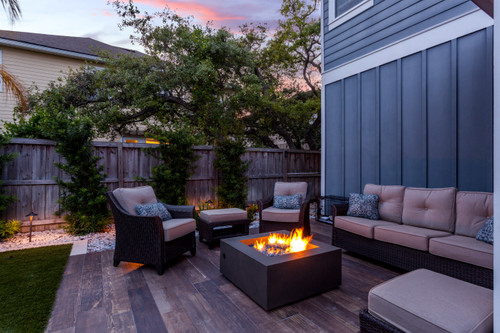
How to Choose a Gas Fire Pit for Your Patio, Deck, or Landscape
Posted by Admin on 6th Sep 2026
The First Decisions to Make
- Natural gas or propane?
- Natural gas may suit a permanent fire feature where a suitable fuel line is practical. Propane may offer more placement flexibility, but tank type, storage, access, hose routing, and ventilation remain product-specific.
- How much heat do you need?
- Use BTU ratings to compare listed models, not to predict comfort from a simple patio-size chart. Wind, seating distance, burner design, flame pattern, and outdoor temperature all affect the experience.
- Can a gas fire pit go under a covered patio?
- Only when the exact appliance instructions permit the installation and the site meets all clearance, ventilation, fuel, and overhead requirements. Do not rely on generic online guidance for a covered location.
- Who should handle installation?
- Have fuel-gas connections, electrical work, permits, clearances, and final placement reviewed and completed by appropriately qualified professionals under local rules and the appliance instructions.
A gas fire pit is easier to enjoy when the important decisions happen before the product search becomes serious. Fuel source, patio layout, seating distance, nearby materials, overhead conditions, utilities, and the appliance manual matter more than a product photograph. Once those constraints are clear, choosing the size, material, burner, finish, and ignition system becomes simpler.
Important: This guide provides general buying information, not an installation plan. Before purchase, review the exact model manual, fuel configuration, intended location, nearby surfaces, overhead structures, and planned gas or electrical work with the appropriate qualified professionals.
Start With Placement, Then Choose the Fuel
Natural gas and propane can both create a controllable outdoor flame, but they fit different projects. The first question is not which fuel is universally better. It is whether the fire feature must remain in one location and what the property can safely support.
| Decision Point | Natural Gas | Propane |
|---|---|---|
| Location | Usually planned for a fixed location with an approved permanent fuel line. | May provide more flexibility, subject to the appliance, tank, hose, enclosure, and clearance requirements. |
| Routine use | No portable tank exchanges, but the fixed supply and shutoff must be properly designed and installed. | Requires fuel-level monitoring, tank access, and a safe refill or exchange plan. |
| Project coordination | May require gas-line routing, permits, trenching, and restoration of finished surfaces. | Still requires the approved regulator, hose, tank orientation, enclosure ventilation, and setup described by the manufacturer. |
| Future flexibility | Best when the final location is known and unlikely to change. | Can be easier to plan where a permanent fuel line is impractical, but not every propane model is portable. |
Fuel conversion is model-specific. Do not assume a fire pit can be changed from natural gas to propane or from propane to natural gas. Confirm the listed fuel configuration and any permitted conversion process before ordering.
The Contemporary Linear Gas Fire Pit by Yard Couture is a useful example because its current options include natural gas or liquid propane, manual match-lit or electronic ignition, and powder-coated aluminum or Corten steel construction.

For a self-contained propane design, the The Outdoor Plus Isla Propane Fire Pit Table uses a concealed tank compartment. This model requires a specific modified horizontal propane tank purchased separately, which illustrates why tank requirements must be checked on the product page rather than assumed.

Use BTU Ratings to Compare Models
A British thermal unit, or BTU, is a unit of energy.[1] A fire pit's BTU rating helps compare burner input, but it cannot promise how warm every patio will feel. An open, windy terrace creates a different experience from a sheltered courtyard with close seating. Flame pattern, burner layout, fire media, outdoor temperature, and seating distance all influence perceived warmth.
Instead of choosing from a generic patio-size chart, mark the proposed fire-pit footprint on the ground and place chairs where people will actually sit. Decide whether the feature is intended mainly for visual atmosphere, for extending a mild evening, or for providing significant warmth in an exposed gathering area. The last goal may require a different outdoor-heating strategy.
Choose a Material for the Setting
Material affects weight, appearance, delivery planning, corrosion behavior, and the relationship between the fire pit and the surrounding hardscape. It does not remove the need for positive drainage, approved fire media, correct appliance covers, or compliance with the product manual.
| Material | Why It Is Chosen | Placement and Care Focus |
|---|---|---|
| Powder-coated aluminum | Lower weight and a controlled range of finish colors | Confirm finish care, product weight, wind stability, heat design, and suitability for the exposure. |
| Corten weathering steel | A changing natural-rust appearance | Plan for rust-colored runoff near light or porous hardscape and verify the expected patina condition. |
| GFRC concrete | A substantial architectural form in varied textures and colors | Review product weight, delivery access, drainage, finish variation, surface support, and freeze-thaw guidance. |
| Stainless steel or copper | Distinct metal finishes and a more specialized visual character | Confirm the metal grade, finish behavior, cleaning method, patina expectations, and coastal suitability. |
The Formed Block Gas Fire Table by Ore Designs is available with powder-coated aluminum and natural-rust finish options. It also offers natural gas or liquid propane configurations and match-lit or electronic ignition choices.

The The Outdoor Plus Linear Cabo Fire Pit provides a contrasting GFRC example. Current options include natural gas or liquid propane and match-lit or electronic ignition configurations.
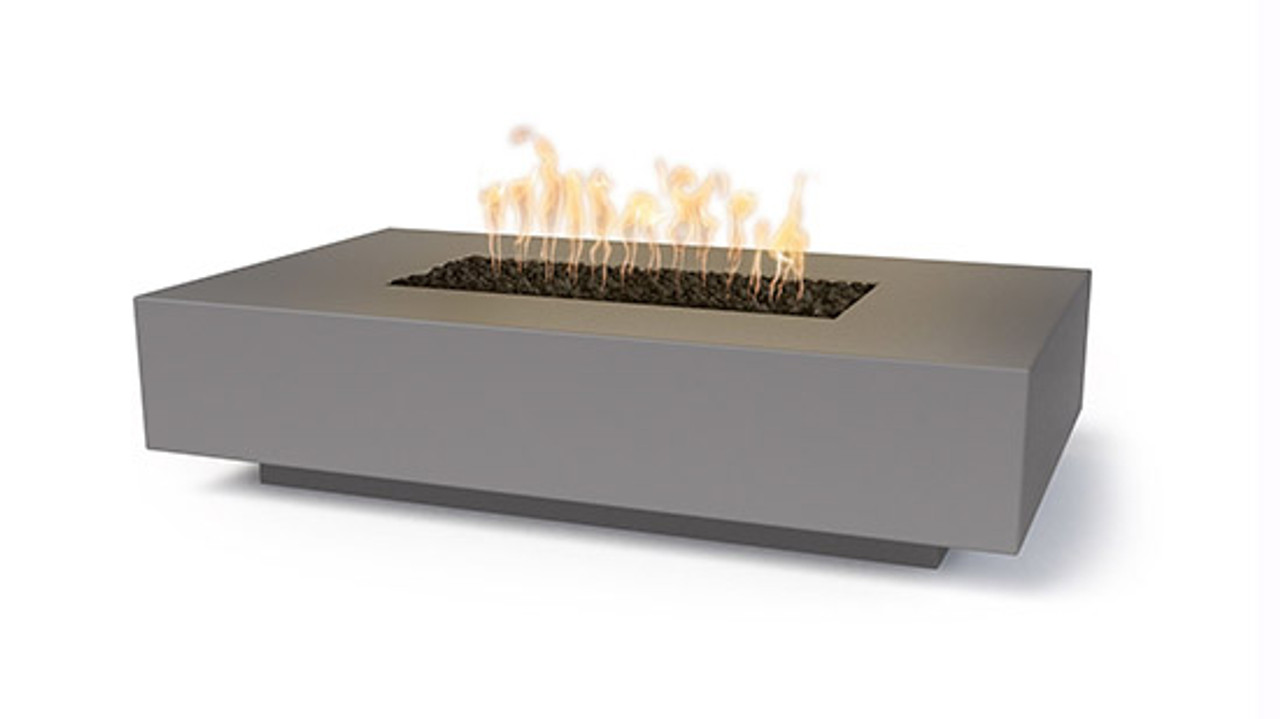
Browse Yard Couture's current fire pit collection or narrow the selection to gas fire pits and propane-tank fire pits. Treat the individual product page and appliance documentation as the final source for available fuels, ignition systems, materials, and dimensions.
Match the Ignition System to the Project
Match-lit and electronic ignition systems solve different needs. A match-lit system can be straightforward when the appliance is designed for it and no electrical connection is planned. Electronic ignition may provide switch, remote, or automation options, but it can introduce transformer, GFCI, weather-protection, wiring, access, and service requirements.
Do not select an ignition system on convenience alone. Confirm the exact power requirement, control method, fuel compatibility, certifications, emergency shutoff, service access, and installation instructions for the selected appliance. If a product offers multiple ignition choices, its listed output or burner configuration may also vary by option.
Use Only Approved Fire Media
Fire glass, lava rock, and ceramic logs influence flame appearance and the visual character of the fire feature. They are not interchangeable in every burner pan. Follow the appliance manufacturer's instructions for approved media type, quantity, depth, arrangement, and replacement.
Too much media or an unapproved configuration can interfere with the burner and ignition system. Select fire glass from the fire pit accessories collection only after confirming the required amount and compatibility with the chosen model.
Clearance and Ventilation Are Product-Specific
Online clearance figures are often presented as universal rules, but fire-pit clearances, overhead requirements, ventilation, deck installation, fuel enclosures, and combustion restrictions depend on the listed appliance and the site.
The U.S. Consumer Product Safety Commission identifies ANSI Z21.97 and CSA 2.41 among standards applicable to outdoor decorative gas appliances.[2] A standard name does not prove that a particular model is listed or suitable for a specific patio. Confirm the certification shown for the exact product and configuration.
The U.S. Fire Administration also recommends using outdoor fire features at least 10 feet from a home or anything that can burn.[3] The appliance manual and local requirements may require different or greater clearances, so always follow the most restrictive applicable instructions.
Provide the installer with the model information, site plan, nearby walls, overhead elements, fuel location, electrical availability, deck or roof details, and intended seating layout. Enclosure ventilation openings must remain unobstructed, and a gas fire pit must never be used indoors unless the appliance is specifically listed and installed for that use.
Before Finalizing a Gas Fire Pit
| Planning Area | What to Confirm |
|---|---|
| Fuel | Natural gas or propane configuration, permitted conversion, line or tank requirements, regulator, shutoff, and qualified installation |
| Location | Footprint, seating distance, traffic flow, wind, nearby combustible materials, walls, overhead structures, and surface support |
| Appliance manual | Clearances, ventilation, installation surface, cover use, fire media, drainage, ignition, electrical work, and maintenance |
| Installation team | Gas contractor, electrician, general contractor, permits, inspections, delivery access, lifting needs, and final commissioning |
| Long-term ownership | Approved fire pit lid or cover, drainage, cleaning, finish care, winter procedures, replacement parts, and service access |
Choose the Model That Fits the Real Site
The right gas fire pit is not automatically the largest model or the one with the highest BTU rating. It is the appliance that suits the intended use, fits the location, supports the selected fuel and ignition system, and can be installed and maintained according to its documentation.
Compare Yard Couture's outdoor fire pits, gas fire pits, and hidden-tank propane fire pits. When you are ready to discuss fuel, ignition, material, dimensions, or customization, contact Yard Couture with photographs and measurements of the intended site.
Product availability, specifications, images, finishes, certifications, pricing, and lead times may change. Confirm current details on the individual product page and in the appliance documentation before ordering or beginning installation.