
Commercial Outdoor Planters: A Buyer’s Guide to Materials, Scale, and Placement
28th Aug 2026
Quick Answers
- What is the best material for a commercial outdoor planter?
- There is no universal winner. Corten steel suits sites that can accommodate a developing patina and rust-colored runoff. Powder-coated aluminum is useful where lower empty weight and consistent color matter. GFRC provides a substantial architectural appearance without the full mass of solid precast concrete. Construction, finish, drainage, and exposure matter as much as the material name.
- Do outdoor planters need drainage?
- Drainage is generally essential for planted outdoor containers because it reduces standing water around roots and helps limit freeze-thaw problems. Confirm the drain-hole configuration, liner, and irrigation provisions for the selected product before ordering.
- Can Corten steel stain paving?
- Yes. Rust-colored runoff produced during patina development can mark light concrete, pavers, stucco, and other stain-sensitive surfaces. Plan the drip path and consider feet, pads, gravel, or another compatible surface-protection strategy.
- How heavy is a large planter after planting?
- Often far heavier than it appears. Include the planter's empty weight, saturated growing media, plant material, retained water, and any ballast in the load calculation, especially on rooftops, decks, balconies, and waterproofed plazas.
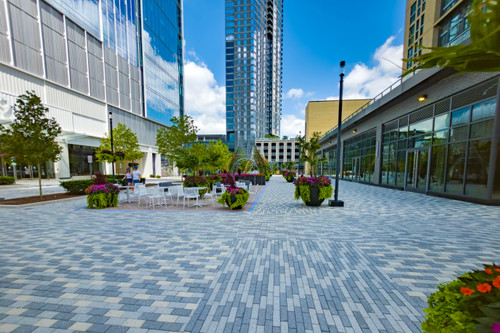
Commercial outdoor planters do more than hold plant material. They frame an arrival, define a restaurant patio, soften a pedestrian route, screen equipment, or organize an open rooftop into usable zones. A planter that is too light, poorly drained, difficult to deliver, or out of scale can quickly become a maintenance problem rather than an asset.
The buying process becomes easier when it follows the order imposed by the site: define the planter's job, assess the exposure, select a suitable material and construction level, and then solve drainage, operating weight, delivery, placement, and long-term care before the order is placed.
Start With the Job the Planter Needs to Do
A long rectangular planter can establish a patio boundary without creating a permanent wall. Tall, narrow forms can add privacy where floor space is limited. Large, low profiles can define a pool deck or courtyard while preserving sightlines. At a multifamily or hospitality property, repeating one profile across entrances, courtyards, mailbox areas, and amenity spaces creates a more coherent landscape than a collection of unrelated containers.
This is where commercial planning differs from a casual residential purchase. The planter may need to tolerate carts, mowers, guests, irrigation overspray, seasonal plant changes, and repeated maintenance. It may also need to match future phases of the property. A profile or finish that cannot be reordered later can produce a visible mismatch when the site expands or damaged units must be replaced.
Begin by naming the job in plain language: screen this equipment area, divide this patio, anchor this entrance, or create a planting run along this path. That decision should guide the shape, height, footprint, and planting volume before a product is selected from a photograph.
The High Rectangle Metal Planter Box is one current option for creating privacy screens, defining seating areas, and adding planting capacity along walkways or patios. It is offered in Corten steel, natural-rust mild steel, and powder-coated aluminum.

What Commercial Grade Should Mean in a Planter Specification
Treat "commercial grade" as shorthand rather than a complete specification. In metal planters, confirm wall thickness, seam construction, weld quality, reinforcement, base design, and finish system. In concrete planters, confirm the material type, edge details, drainage provisions, lifting requirements, and the manufacturer's handling guidance.
Drainage and the base deserve as much attention as the visible shell. Feet or pads can keep a planter from sitting directly in standing water, permit airflow beneath the unit, and reduce trapped moisture against paving. On a roof or deck, the base must also work with the approved membrane-protection strategy.
Keep a specification record for every selected model. Record the outside dimensions, usable interior depth, empty weight, estimated filled weight, finish code, drainage configuration, lifting requirements, installation details, and information needed to match future phases. This record is more useful than relying on a broad category label when it is time to reorder or replace a planter.
Match the Material to the Exposure
Corten Weathering Steel
Weathering steel is selected for its changing rust-toned surface. Under suitable exposure conditions, the material develops a tightly adhering patina rather than relying on paint. Site conditions influence whether the patina forms as intended, so drainage, moisture retention, salt exposure, and the surrounding surfaces must be considered.[1]
Corten is a strong visual choice for courtyards, entrances, and public landscapes, but it requires a runoff plan. Early patina development can be uneven, and water leaving the planter may carry rust-colored residue onto adjacent hardscape. Provide separation from light paving and stucco, evaluate the slope, and confirm whether the selected product includes a liner or interior treatment.
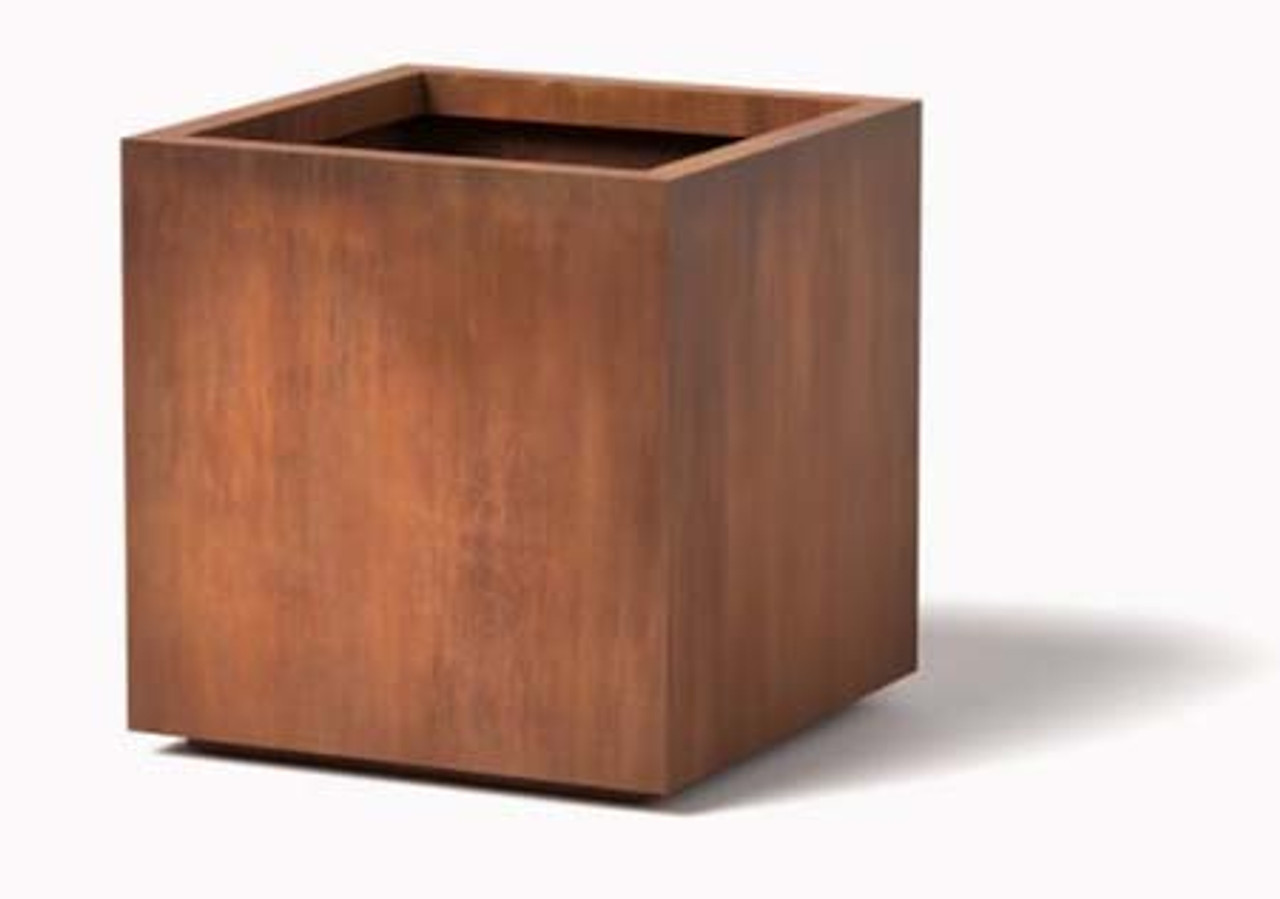
The Yard Couture Cube Metal Planter Box is useful for comparing Corten steel, natural-rust mild steel, and powder-coated aluminum within the same basic planter design.
Powder-Coated Aluminum
Aluminum reduces empty weight, which can help on rooftops, elevated decks, and sites with difficult delivery access. The trade-off is that a lightweight empty vessel can become unstable when it is tall, exposed to wind, or planted with top-heavy material. Those locations may require ballast, a lower center of gravity, anchoring, or a different planter profile.
Finish quality matters outdoors. Confirm the coating system, standard and custom colors, touch-up procedure, and care guidance for the selected model. Promptly addressing coating damage is generally easier than allowing a damaged area to collect dirt and moisture through repeated weather cycles.
GFRC Concrete
GFRC, or glass fiber reinforced concrete, is used when a project needs the visual presence of concrete with less mass than comparable solid precast construction. Actual weight, reinforcement, finish, drainage, freeze-thaw suitability, and care requirements remain product-specific. Yard Couture's concrete planter collection provides current model dimensions and finish options.
The The Outdoor Plus Maya Concrete Planter is a current GFRC example offered in multiple square sizes and finish colors.

Concrete planters still require positive drainage. Water held in the growing media or at the base can create avoidable stress in freezing conditions. Deicing salts should not be allowed to collect against the planter, and exposed edges should be inspected in high-traffic settings so small chips can be addressed promptly.
Mild Steel and Stainless Steel
Mild steel can be a practical route to large custom formats when the finish and drainage plan suit the exposure. Natural-rust mild steel continues to oxidize and can produce staining runoff, while powder-coated mild steel requires finish inspection and repair if damaged.
Stainless steel is often considered when corrosion resistance and a refined appearance are priorities. The alloy grade, surface finish, fabrication, fasteners, chloride exposure, and cleaning schedule all affect performance. Confirm the actual material and finish on the individual product page instead of relying on a category name alone.
| Setting or Exposure | Materials to Evaluate | Planning Focus |
|---|---|---|
| Rooftop or elevated deck | Powder-coated aluminum or appropriately specified GFRC | Filled weight, wind stability, structural review, drainage, anchoring, and membrane protection |
| Pool deck or splash-prone terrace | GFRC or powder-coated aluminum | Positive drainage, finish care, irrigation overspray, surface staining, and slip hazards |
| Freeze-thaw climate | Product-rated GFRC or properly finished metal | Blocked drains, saturated media, salt splash, winter maintenance, and manufacturer guidance |
| High-traffic public plaza | Corten steel, finished metal, or GFRC | Impact resistance, edge durability, anchoring, runoff path, maintenance access, and replacement availability |
| Covered entry or interior | Aluminum, stainless steel, finished mild steel, or compatible GFRC | Water containment, floor protection, access, plant care, and interior clearances |
Use the table to narrow the shortlist, not to write a final specification. Product construction and the actual site conditions determine whether a material is suitable.
Size for the Planting, Then Check the Space Around It
A large commercial planter needs enough interior volume for the mature root system, not only enough room for the nursery-size plant at installation. Container size, drainage, weight, root space, and wind stability are connected concerns.[2] Larger soil volumes can improve the moisture buffer available to plants, but they also add substantial load and reduce portability.
Above ground, scale is about relationships. A low planter can organize a seating zone without blocking views. A taller profile can provide screening or separation. Long rectangles create a continuous boundary, while round and square planters tend to read as individual accents. The site should dictate the form.
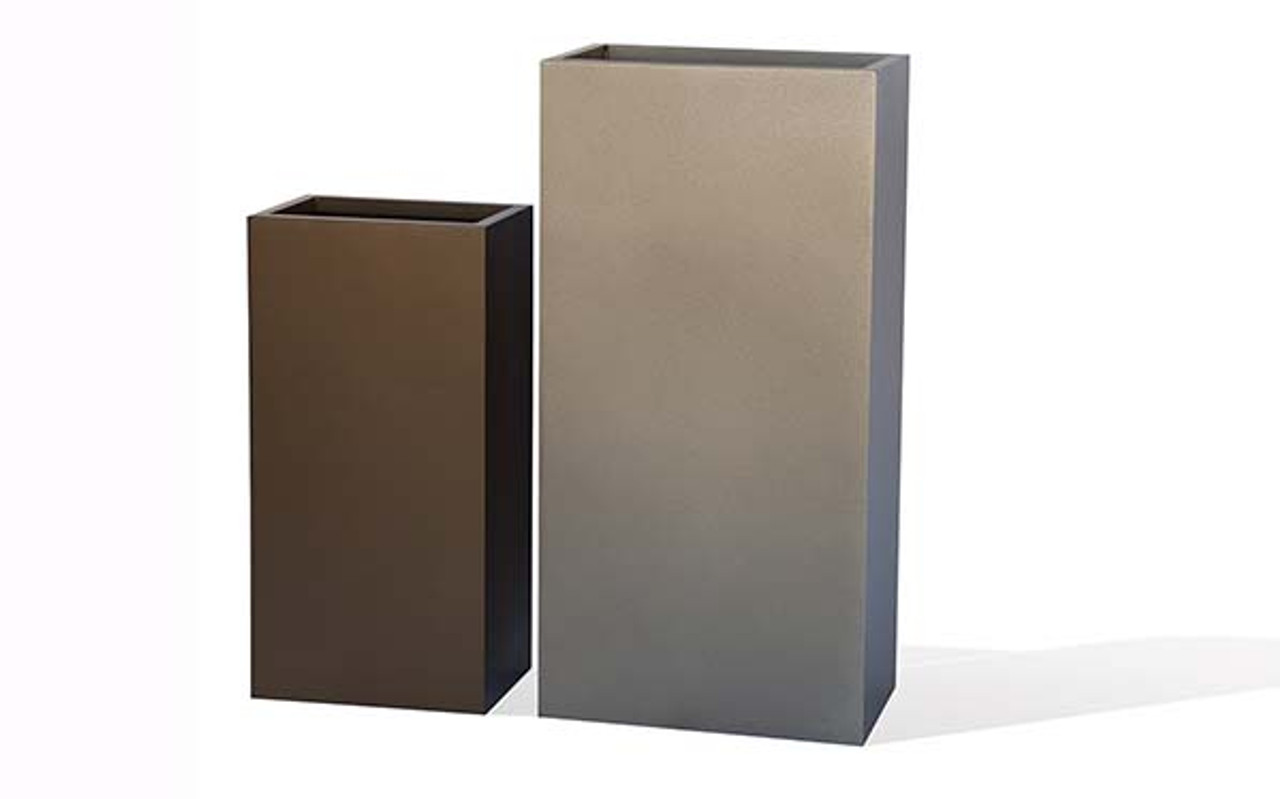
The Bar Planter is a narrow, tall option designed for rooftop terraces, patios, balconies, and other areas where privacy is needed without using a wide footprint.
Maintain comfortable and code-compliant circulation around planters. The U.S. Access Board states that an accessible route generally requires a continuous clear width of at least 36 inches, with limited exceptions.[3] Local requirements and the complete route design may require more space, so do not treat a minimum dimension as the design target.
Drainage and Weight Are Placement Decisions
Drainage protects both the planting and the surface beneath it. Without an outlet, roots can remain waterlogged, media can stay saturated during cold cycles, and runoff can deposit mineral residue, algae, tannins, or rust color across paving. Confirm whether the selected planter has drain holes, a liner, an irrigation sleeve, a false bottom, or a sealed base because these features vary by model.
Protect the surface below. Feet, pads, trays, pedestals, gravel strips, and approved protection boards can create separation between a planter and sensitive paving or roofing. With Corten, extend the plan beyond the planter base to the route water follows after it leaves the drain. On membrane roofs, follow the roofing system's published requirements and involve the appropriate roofing professional or design team.
Rooftops and decks require a separate load review. Saturated growing media is part of the operating condition, not a temporary inconvenience. Applicable structural loads and site conditions must be assessed for the actual planter, planting assembly, and support location.[4]
Plan the Delivery Route Before the Planter Is Planted
Large planters often arrive by freight. Confirm the delivery route while the order is still adjustable: gate width, turns, elevator dimensions, loading access, distance from the truck to the final location, staging space, and the equipment required to move each unit. A planter can fit the design but still be impossible to install if it cannot pass through the access route.
Place the empty planter, confirm drainage and irrigation access, and then install the planting. Once a large unit contains wet media and mature plant material, moving it becomes a separate project. On public properties, also plan for anchoring, maintenance access, drain cleaning, and irrigation service without forcing workers into traffic or guest areas.
Maintain the Material You Select
Each material requires a different care plan. Powder-coated aluminum generally benefits from gentle cleaning and prompt attention to coating damage. Corten requires runoff management and should not be sealed or painted unless the manufacturer specifically recommends it. GFRC should be maintained according to the stated sealing, cleaning, and winter-care guidance, with drains kept clear and exposed edges monitored in busy areas.
For planted containers in cold climates, review the plant and growing-media plan along with the planter shell. Container gardens can require more frequent moisture monitoring than in-ground planting, and exposed roots may experience different winter conditions.[2] Do not assume a plant that is hardy in the ground will perform the same way in an elevated container.
Budget the Full Lifecycle, Not Only the Unit Price
The visible unit price is only one part of a commercial planter budget. Material, dimensions, wall thickness, finish, drainage components, customization, quantity, freight, lifting equipment, growing media, plants, irrigation, installation labor, structural review, and future maintenance can all affect the project cost.
Consider the cost of a poor fit. Replacing a planter that is too light for a windy deck, repairing stained paving, or reworking a blocked delivery route can cost more than resolving the issue before the purchase order is placed. A durable and repeatable planter system is easier to justify when the full service life of the property is part of the comparison.
If the design pairs planters with a flame feature, coordinate traffic flow, planting, combustible clearances, utilities, and the selected fire pit or fire table during site planning rather than after the planting plan is complete.
Commercial Planter Buying Checklist
| Planning Area | Details to Confirm |
|---|---|
| Purpose and placement | Screening, boundary, entrance feature, planting run, circulation clearances, wind, sun, salt, splash, and runoff exposure |
| Product specification | Outside dimensions, usable inside depth, material, gauge or wall thickness, finish code, reinforcement, warranty, and replacement availability |
| Planting and drainage | Root volume, growing media, drain holes, liner, false bottom, irrigation entry, overflow path, and protection for the surface below |
| Weight and stability | Empty weight, saturated filled weight, mature planting, ballast, wind stability, anchoring, and structural review |
| Delivery and installation | Packaged dimensions, freight service, gate width, elevator capacity, turning clearances, staging area, receiving labor, and lifting equipment |
| Ongoing care | Cleaning, finish repair, patina runoff, drain inspection, irrigation service, winter care, and replacement records |
Choose a Planter That Fits the Entire Site
The best commercial planter is not simply the strongest, lightest, or most expensive option. It is the model whose material behavior, dimensions, drainage, operating weight, finish, access requirements, and maintenance needs fit the actual property.
Browse Yard Couture's metal planters, GFRC concrete planters, and rectangular planter collection. Review available planter finishes and custom planter options, or contact Yard Couture with project dimensions, site photographs, material preferences, delivery constraints, and the number of planters required.
Product availability, specifications, images, finishes, pricing, and lead times may change. Confirm current details on the individual product page and with Yard Couture before ordering or beginning installation.