
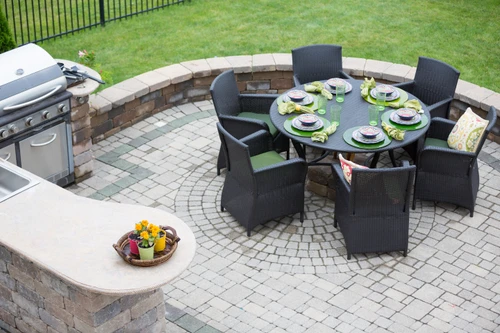
The Complete Guide to Specifying Premium Outdoor Living Products for Residential and Commercial Spaces
Posted by Admin on 25th Aug 2026
Quick Answers
- Does Corten steel stain concrete? It can. Rust-colored runoff produced during weathering may discolor light-colored concrete, limestone, pavers, stucco, and other porous surfaces. Plan the base, drainage direction, and runoff path before installation.
- Is powder-coated aluminum better than steel for patio furniture? It depends on the site and the desired look. Aluminum is lightweight and does not produce iron rust, which makes it useful in humid, coastal, rooftop, and stain-sensitive settings. Steel offers greater weight and a substantial feel but requires material- and finish-specific care.
- Do gas fire pits need professional installation? Hard-piped natural gas and propane systems should be sized, connected, and tested by an appropriately licensed professional. Portable propane products must still be installed and operated according to the product manual and local requirements.
- How far should a fire pit be from a house? A commonly cited starting point is at least 10 feet from structures and combustible materials, but the listed product instructions and local fire code control. Some installations require greater clearances.
- What is GFRC concrete? Glass Fiber Reinforced Concrete is a composite commonly used for outdoor planters, fire bowls, and fire tables. It can provide a substantial concrete appearance with less weight than conventional poured concrete, although strength, weight, and freeze-thaw performance remain product-specific.
Investing in premium outdoor living products changes both the appearance of a landscape and the way the space is used. Whether you are designing a residential backyard, rooftop amenity area, restaurant courtyard, or commercial hospitality space, material selection, product specifications, utility planning, and delivery access all affect long-term performance.
This guide explains the practical differences among Corten weathering steel, powder-coated aluminum, stainless steel, copper, GFRC concrete, premium outdoor fabrics, gas fire features, architectural planters, and outdoor kitchens. Browse Yard Couture's premium patio furniture, custom metal planters, outdoor fire pits, and outdoor kitchens while comparing the considerations below.
Evaluating Materials for Premium Outdoor Living Products
The material affects weight, corrosion behavior, maintenance, comfort, delivery requirements, and visual character. High-quality fabrication cannot compensate for a material that is poorly matched to the installation environment, so begin with the site conditions rather than appearance alone.
Corten Weathering Steel Versus Powder-Coated Aluminum Planters
Custom metal planters can define entrances, dining zones, property boundaries, and planting areas. Corten weathering steel develops an oxide layer that changes from raw gray to orange and deeper brown tones. Under suitable wet-and-dry exposure, the patina can slow further atmospheric corrosion.[1] During weathering, however, rust-colored runoff may stain adjacent hardscape.
Powder-coated aluminum offers a lighter alternative with a controlled color. Aluminum does not produce iron rust, although exposed aluminum can oxidize if the coating is damaged. Powder-coated products should still be handled carefully because impacts and abrasion can scratch or chip the finish.
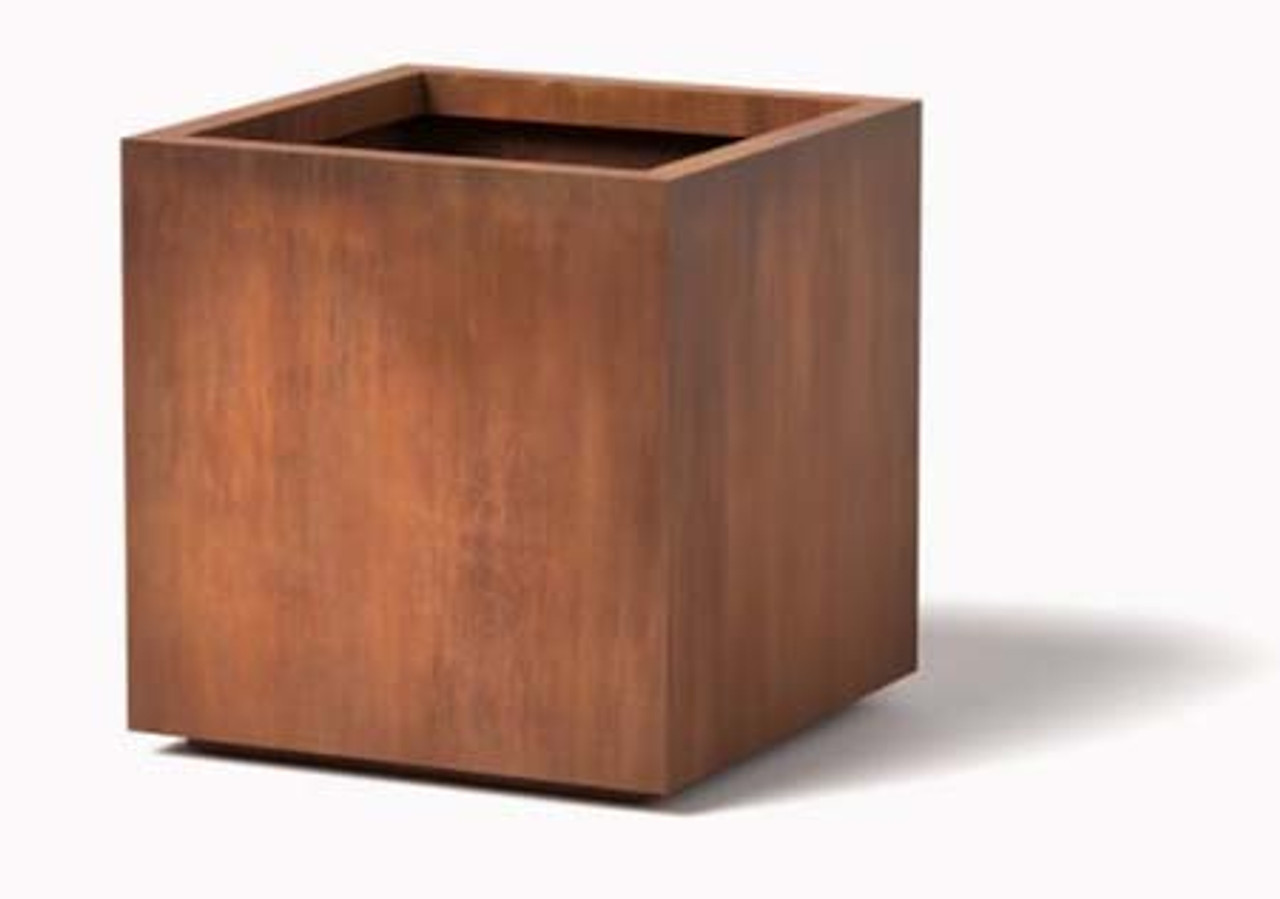
For a direct comparison within one design, the Yard Couture Cube Metal Planter Box is available in Corten steel, natural-rust mild steel, and powder-coated aluminum options.
Stainless Steel, Mild Steel, and Copper for Fire Features
Stainless steel is commonly used for burner pans, burner rings, valves, and ignition-system enclosures because it provides useful heat and corrosion resistance. The exact grade matters: 304 stainless steel is common, while 316 stainless steel is often selected where greater chloride resistance is needed.
Mild steel is frequently used for fire-pit bodies because it is strong, formable, and visually substantial. Natural-rust mild steel will continue to oxidize, while powder-coated mild steel requires inspection and finish care if the coating is damaged. Copper offers a distinctive living finish that can shift from metallic brown toward darker, green, or blue tones depending on exposure.
GFRC Concrete and Premium Patio Furniture
GFRC is used for outdoor fire tables, fire bowls, water features, and planters that need a substantial concrete appearance.[3] It can be lighter than comparable conventional concrete construction, but the actual weight, reinforcement, freeze-thaw rating, and care requirements must be confirmed for the individual product.
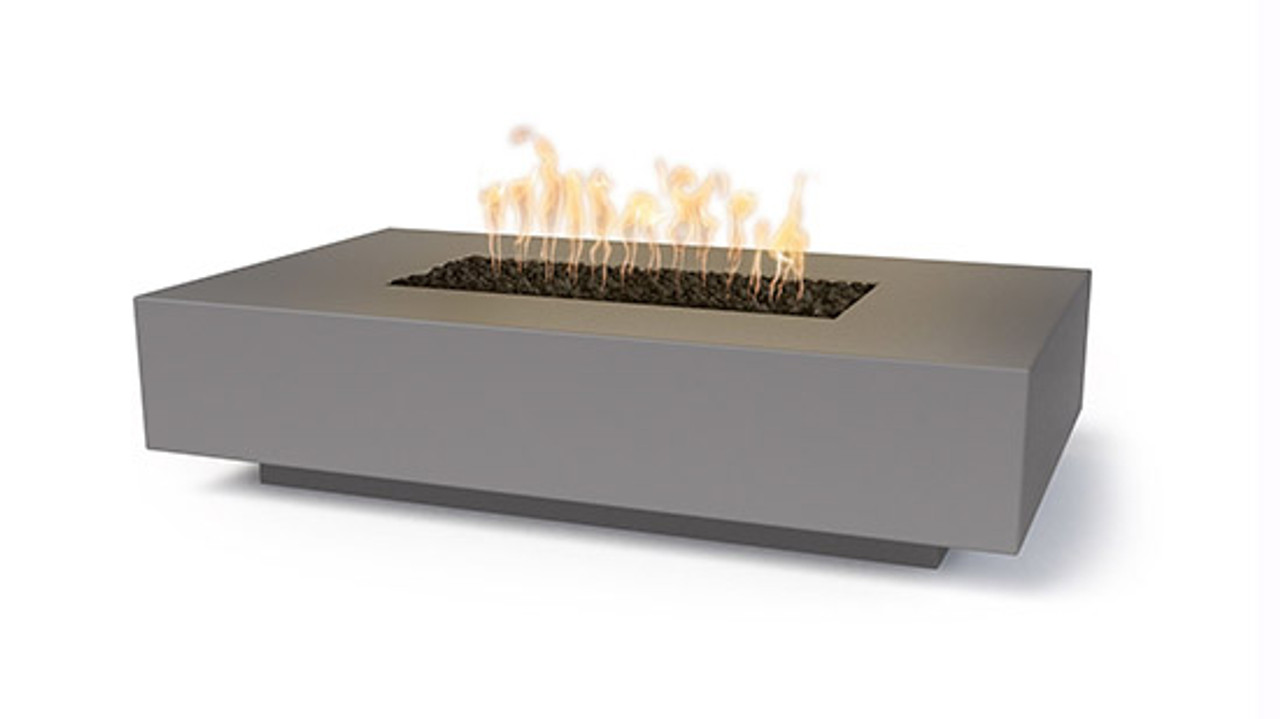
The The Outdoor Plus Linear Cabo Fire Pit pairs a GFRC body with stainless-steel fire components and is offered in multiple lengths.
For premium patio furniture, evaluate the frame, finish, cushion construction, fabric, fasteners, and replacement-part availability. Powder-coated aluminum frames reduce weight and avoid iron rust. Solution-dyed outdoor fabrics and quick-drying cushion systems can improve resistance to fading and moisture, but cleaning and off-season protection still extend usable life.
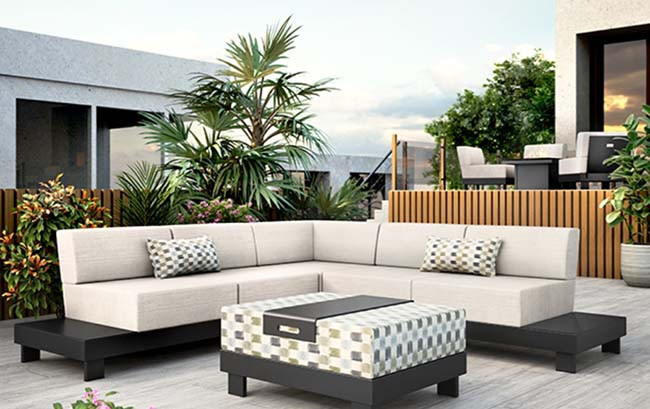
The Homecrest Urban Outdoor Sectional Set illustrates a modular powder-coated aluminum seating system with outdoor cushions and multiple configuration options.
Selecting the Right Product Types for Your Space
A residential dining patio, multifamily amenity deck, hotel pool area, and restaurant courtyard have different traffic, maintenance, safety, storage, and accessibility requirements. Select products according to the way the space will operate rather than selecting individual pieces in isolation.
Architectural Planters and Raised Garden Beds
Custom planters can direct foot traffic, create screening, frame entrances, and divide dining or lounge areas. Before ordering, calculate the required root volume and the total operating weight of the planter, soil, retained water, drainage layer, and mature plant material. Large containers may require structural review when installed on decks or rooftops.
Raised beds also require decisions about open or closed bottoms, soil depth, irrigation routing, cross-bracing, drainage, assembly access, and the finished runoff path. The Corten Steel DIY Raised Rectangle Planter Box is an open-bottom modular option intended for substantial landscape applications.

Fire Tables, Fire Pits, and Fire-and-Water Features
Gas fire pits and fire tables create a controlled focal point for seating areas, while wood-burning fire pits provide a more traditional experience with additional considerations for sparks, ash, smoke, and local burn restrictions.
Fire-and-water features combine a gas burner with a water bowl or spillway. These products require coordinated gas, water, electrical, drainage, and access planning. The The Outdoor Plus Maya Fire & Water Bowl combines a GFRC bowl, stainless fire components, and a copper scupper.

Outdoor Grills, Kitchens, and Patio Heating
Outdoor kitchens range from individual built-in grill heads to complete islands with storage, refrigeration, sinks, side burners, griddles, and electrical accessories. A built-in grill requires a correctly sized enclosure and manufacturer-specified clearances. A complete island simplifies product coordination but still requires delivery access and utility planning.
The The Outdoor Plus Videl USA Luxe 112I BBQ Island is a current complete-island example with a built-in grill, sink, refrigerator, and storage.

Patio heaters can extend seasonal use, but fuel type, mounting location, ceiling height, wind exposure, heat coverage, and combustible clearances must be reviewed. Yard Couture's patio heater guide explains freestanding, wall-mounted, ceiling-mounted, gas, and electric configurations. Confirm current product availability before planning around a specific model.
Customization, Sizing, and Design Considerations
Premium architectural products are rarely one-size-fits-all. Planters and fire features may be offered in multiple dimensions, metals, finishes, drainage configurations, ignition systems, and fuel types. Custom powder-coat color matching may also be available for selected products.
For planters, specify the outside dimensions, usable inside dimensions, soil depth, drainage pattern, irrigation entry, false-bottom requirements, feet or casters, and finished operating weight. Review Yard Couture's planter finish options and custom planter extras while confirming which options apply to the selected model.
For gas fire features, choose the fuel type and ignition system before utilities are installed. Match-lit systems are comparatively simple. Electronic ignition systems may add flame-sensing, automatic shutoff, relighting, remote control, or automation features, but capabilities vary by burner system. Do not assume every fire feature supports every ignition option.
Commercial and hospitality installations may require heavier-duty construction, tamper-resistant components, replacement-part planning, code-compliant fabrics, accessibility clearances, and maintenance procedures suited to frequent public use.
Climate and Environmental Exposure Factors
Climate should influence material and finish selection. Salt spray and chlorides can accelerate corrosion in carbon steel and may contribute to surface staining on some stainless steels. Coastal projects require attention to the exact alloy, finish, fasteners, exposure, cleaning schedule, and manufacturer guidance.
In freeze-thaw regions, drains and overflow paths must remain open so water does not stay trapped in containers or fire-feature cavities. For GFRC products, confirm the manufacturer's freeze-thaw guidance instead of assuming that every concrete product performs the same way.
Intense UV exposure increases demands on fabrics, polymers, finishes, and covers. High-wind locations require secure layouts and product-specific anchoring or weight planning. Do not rely on a heavy appearance alone; confirm the actual product weight and any mounting provisions.
Site Preparation and Installation Planning
Plan the complete delivery and installation sequence before hardscaping is finished. Gas lines, electrical conduit, water supply, drains, shutoffs, and control access may need to be routed, inspected, and tested before products are placed.
Measure gates, doors, elevators, stairs, overhangs, loading zones, turning clearances, and the route between the truck and the final location. Large products may require a pallet jack, forklift, crane, lifting straps, additional labor, or temporary access.
If a large planter, GFRC fire table, or outdoor kitchen will be installed on an elevated deck, consult an appropriate design professional about structural capacity. At ground level, provide a stable, level, and properly drained base that can support the operating weight.
Safety, Clearances, and Local Code Compliance
Fire safety is the most important part of gas and wood-burning installations. Follow the listed product instructions and verify permitting, fuel, ventilation, shutoff, and clearance requirements with the appropriate local authority before installation.
Gas must not accumulate inside a fire-table enclosure. Required ventilation openings must remain unobstructed, and the enclosure must be compatible with the selected fuel. Natural-gas and hard-piped propane installations require appropriately licensed professionals for line sizing, connection, leak testing, and applicable permits.
Do not use a general clearance number as a substitute for the product manual. The U.S. Fire Administration recommends using fire pits outdoors at least 10 feet from a home or anything that can burn, but the appliance instructions and local code may require more.[2]
Care, Maintenance, and Long-Term Performance
Clean powder-coated aluminum and stainless steel with mild soap, water, and manufacturer-approved tools. Avoid abrasive pads and chemicals that can damage a finish. Coastal stainless-steel installations may require more frequent washing and product-specific protective care.
Keep planter drains open and remove debris that holds moisture. Manage Corten runoff during early patina development. Inspect powder-coated steel for damage and follow the manufacturer's repair guidance if the coating is compromised.
Before freezing weather, follow the fire-feature manufacturer’s winterization instructions. Shut off fuel when required, clear debris from burners and drains, protect ignition components, and use a compatible cover. Clean grill grease trays and cooking surfaces according to the grill manual.
Outdoor cushions and fabrics benefit from regular cleaning, ventilation, and dry storage during extended periods of nonuse. Even weather-resistant materials last longer when they are protected from standing water, dirt, and unnecessary off-season exposure.
Cost, Lead Times, Freight, and Receiving
Pricing for premium outdoor products reflects material type, gauge or wall thickness, fabrication complexity, finish, dimensions, burner and ignition components, refrigeration, plumbing fixtures, accessories, packaging, and freight. Custom dimensions, cutouts, finishes, and engineering can increase both cost and lead time.
Many products are made to order, so verify current pricing, specifications, production time, and availability on the individual product page or with Yard Couture before placing an order.
Large items commonly ship by freight on pallets or in crates. Confirm whether delivery is curbside, liftgate, commercial-dock, or another service level. Arrange the equipment and labor needed to move the product from the delivery point to the installation area, and inspect the shipment promptly for visible or concealed damage according to the carrier and vendor instructions.
Common Buying Mistakes
- Choosing a material by appearance without evaluating runoff, salt, moisture, UV, wind, and freeze-thaw exposure.
- Ordering a large planter or fire feature before checking the complete delivery route.
- Ignoring the filled weight of planters and the structural capacity of decks or rooftops.
- Installing utilities before confirming the selected model's entry points, pressure, voltage, ventilation, and clearance requirements.
- Assuming all stainless steel, GFRC, powder coating, outdoor fabrics, or ignition systems have identical specifications.
- Using a fire pit before permits, clearances, ventilation, and local restrictions have been confirmed.
- Failing to plan receiving equipment, inspection, and damage reporting for freight deliveries.
Questions to Ask Before Ordering
- What are the exact product dimensions, operating weight, and packaged shipping dimensions?
- Which material, alloy, gauge, finish, and fabrication method are used?
- Which dimensions, colors, drainage options, accessories, or configurations can be customized?
- Does the planter include drainage holes, feet, casters, a liner, or a false bottom?
- What will the planter weigh after soil, retained water, and plant material are added?
- What is the burner output, fuel type, ignition type, and required inlet pressure?
- What ventilation openings and combustible clearances does the fire feature require?
- Are certifications or listings provided for the applicable gas and electrical components?
- Which utilities must be installed before delivery?
- What are the current production time, freight service, delivery requirements, warranty, and return terms?
Bringing Your Outdoor Vision to Life
Specifying premium outdoor living products requires balancing aesthetics, material behavior, safety, maintenance, and installation logistics. Corten steel, powder-coated aluminum, stainless steel, copper, GFRC, and outdoor fabrics each solve different problems. The best selection is the one that fits the actual climate, surfaces, structure, utilities, and use of the space.
Explore Yard Couture's metal planters, raised planter beds, fire pits, fire-and-water features, patio furniture, and outdoor kitchens. When you are ready to discuss dimensions, finishes, fuel systems, or a custom project, contact Yard Couture with site photographs, measurements, delivery constraints, and preferred materials.
Product availability, specifications, images, pricing, lead times, and installation requirements may change. Confirm current details on the product page and with Yard Couture before ordering or beginning site work.