
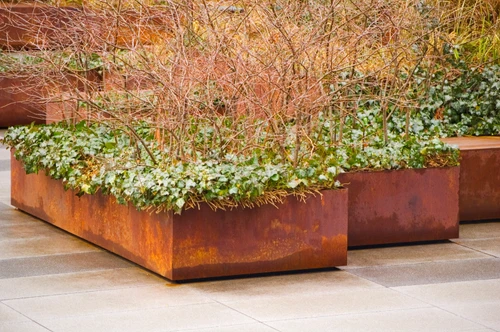
How to Protect Your Patio and Hardscape From Corten Planter Rust Runoff
Posted by Admin on 1st Sep 2026
Corten planters can create a distinctive rust-toned finish outdoors. They can also leave rust-colored runoff on the surface below, particularly while the steel is new. If a planter will sit on concrete, pale stone, tile, decking, or a rooftop terrace, placement and drainage deserve attention before the planter arrives.
The question is not whether Corten is attractive. It is whether the weathering process suits the location. With the right surface, drainage route, and spacing, Corten can be a practical choice. On light or porous hardscape, powder-coated aluminum or GFRC may be a better fit.
This article provides general planning information. Planter construction, drainage, site conditions, materials, and product availability vary. Confirm the requirements of the selected planter and installation before ordering.
Quick Answers
- Will a Corten planter stain concrete?
- It can. New weathering steel may release rust-colored runoff that discolors light or porous concrete and other hardscape.
- Which surfaces require the most caution?
- Light concrete, natural stone, porous pavers, tile, wood, composite decking, stucco, pool coping, and areas where water collects require careful planning.
- How can Corten runoff be managed?
- Plan the drainage path, reduce exterior irrigation overspray, elevate the planter when appropriate, and direct runoff toward gravel, soil, or another compatible drainage area.
- What is the main alternative when staining is unacceptable?
- Powder-coated aluminum does not produce iron-rust runoff. GFRC concrete is another option when a substantial architectural appearance is preferred. Verify the selected product's weight, finish, and drainage details.
Start With a Five-Minute Site Check
- Identify the exact surface below and around the planter. Note whether it is pale, porous, newly installed, sealed, or expensive to repair.
- Follow the route taken by rain, irrigation, planter drainage, and roof runoff.
- Look for pooling, slope, joints, walls, drains, or low areas that may concentrate water.
- Decide whether the design can include gravel, soil, feet, pads, a pedestal, or another controlled runoff path.
- For a roof, balcony, deck, or finished terrace, confirm drainage and filled-planter loading before placement.
Why New Corten Planters Can Leave Rust Marks
Corten is a common name for weathering steel. Its exposed surface changes as an oxide patina develops. A well-formed patina can slow further atmospheric corrosion, but performance depends on the environment and repeated wet-and-dry cycles.[1]
During the early weathering period, rain, condensation, or irrigation can carry rust-colored material down the planter and onto the surface below. The timing and color vary with rain, irrigation, shade, humidity, air movement, salt exposure, and how often the planter becomes wet and then dries. Plan for early runoff instead of assuming the patina will stabilize on a fixed schedule.
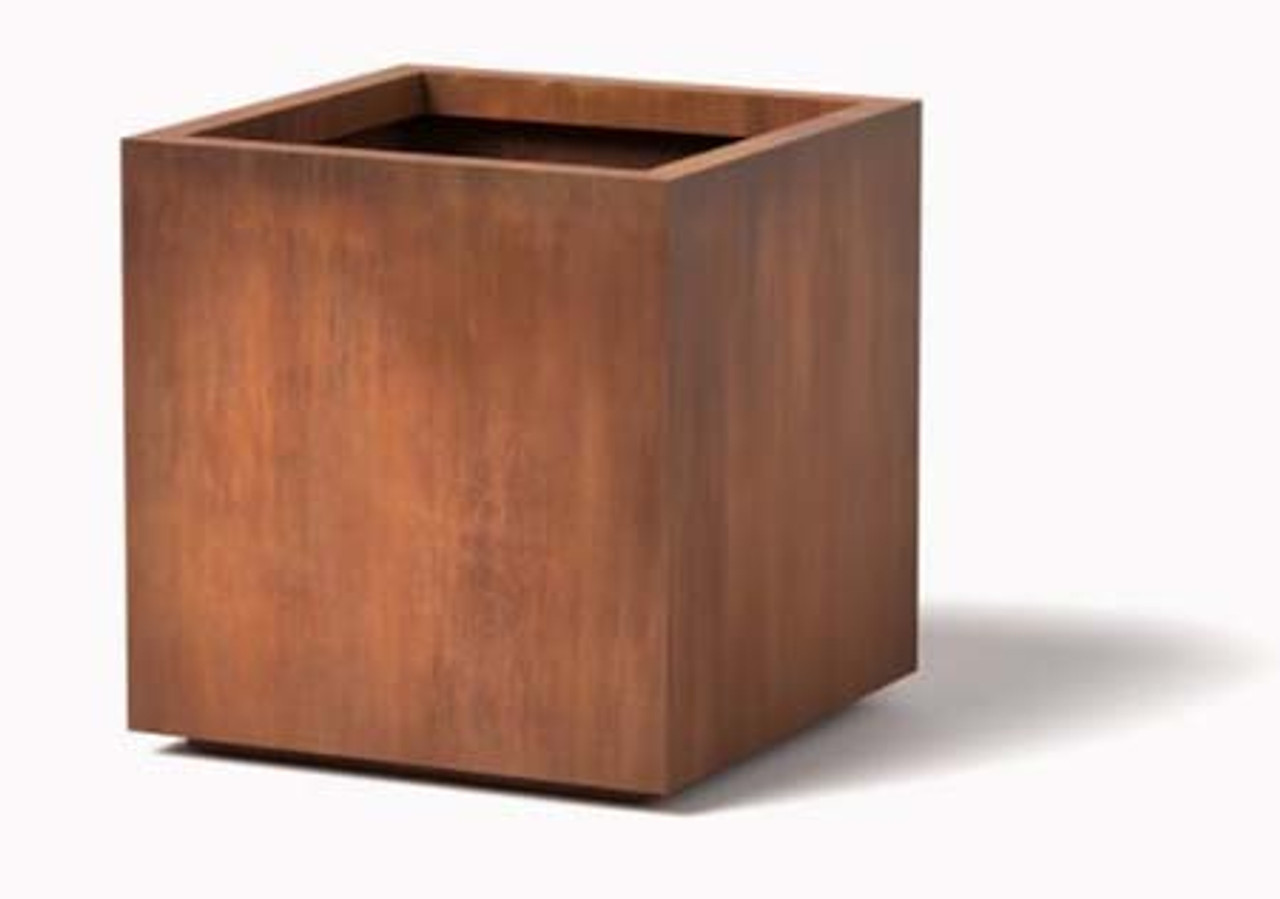
The Yard Couture Cube Metal Planter Box is available in Corten steel, natural-rust mild steel, and powder-coated aluminum, making it useful for comparing a weathering finish with a non-rusting alternative in the same planter form.
Assess the Surface Before Choosing the Planter
The surface below is the first decision point. Dark gravel and garden soil are generally more forgiving than pale concrete, natural stone, and unprotected decking. Even when a surface appears sealed, joints, edges, and low spots can collect water and leave concentrated marks.
Yard Couture's planter finish guide explains that Corten products arrive in a natural state and are not recommended on light-colored or porous surfaces where color transfer is a concern. That product-specific guidance is important, but it does not replace a site plan. Surface condition, drainage, slope, and weather still affect the result.
| Material | Runoff Consideration | Best-Fit Conditions |
|---|---|---|
| Corten steel | Rust-colored runoff can occur while the patina develops. | Soil, gravel, landscape beds, or darker compatible surfaces with a planned drainage route |
| Powder-coated aluminum | Does not produce iron-rust runoff, but the coating still requires appropriate care. | Light patios, decks, rooftop terraces, entrances, and areas with little tolerance for staining |
| GFRC concrete | Does not create Corten-style rust runoff; drainage, finish care, and unit weight remain important. | Projects seeking a substantial architectural form without weathering-steel color transfer |
Manage Water Instead of Ignoring It
The most useful prevention strategy is to control where water travels. Avoid placing a new Corten planter where rain or irrigation will wash directly across a light patio, down a wall, over pool coping, or into an unprotected joint. A planter should not sit in a low area that holds water around its base.
A gravel band or another sacrificial drainage zone can receive runoff before it reaches permanent surfaces. Depending on the planter and site, feet, pads, a pedestal, a compatible tray, or a purpose-built drainage detail may also help. The chosen solution must work with the planter's drainage design and direct water away from the surface being protected.
Keep overhead irrigation from striking the planter exterior when practical. Drip irrigation inside the planter can reduce exterior wetting, although the planter's drain outlet still needs a planned destination. For a finished patio or roof terrace, confirm the drainage route and structural requirements before placing a filled planter.
Where Corten Planters Usually Fit Best
Corten often works best when the patina is part of the landscape design and the surrounding materials can tolerate the runoff. Ground-level planting beds, gravel gardens, and darker compatible surfaces can give the planter room to weather without creating a continuous cleanup problem.
Bottomless raised beds installed directly over soil can reduce the hardscape-staining concern because runoff does not need to cross a finished patio. The Corten Steel DIY Raised Rectangle Planter Box uses an open-bottom design intended for installation over a prepared planting area.

No outdoor Corten location is automatically carefree. Observe splash patterns, downspouts, irrigation heads, slope, and where excess water will leave the planter before finalizing placement.
When an Alternative Material Is the Better Choice
If the surface cannot accept staining risk, consider another material. Powder-coated aluminum is lighter than steel and does not create iron-rust runoff. It is often a better match for pale patios, entrances, decks, balconies, and rooftops, although filled weight, wind stability, anchoring, finish care, and drainage still require review.
The High Rectangle Metal Planter Box is offered in both weathering-steel and powder-coated aluminum options. The aluminum version provides a controlled finish for locations where rust-colored transfer is undesirable.

GFRC provides another visual direction without Corten-style runoff. The The Outdoor Plus Maya Concrete Planter is a current GFRC option available in multiple square sizes and finish colors.

The final decision should consider more than staining. Weight, delivery access, structural loading, drainage, finish color, desired texture, wind exposure, and the property's architecture all affect product suitability.
Care and Stain Response
Inspect the area beneath and around a new planter after rain and irrigation cycles. If runoff is moving toward a vulnerable surface, adjust the drainage route before the staining becomes repeated. Keep debris from blocking drainage openings. Do not apply cleaners, coatings, or sealants to the planter or nearby hardscape unless the product manufacturer and surface manufacturer confirm that the treatment is appropriate.
Existing rust staining can be difficult to remove from porous materials. The correct cleaning method depends on the surface, its sealer, the stain's age, and nearby materials. Test any approved method in an inconspicuous area first. Consider a qualified surface-care professional for valuable stone, decking, pool areas, or extensive patio staining.
Corten Planter Placement Checklist
| Planning Area | What to Confirm |
|---|---|
| Surface | Material, color, porosity, sealer condition, joints, edges, and repair sensitivity |
| Water route | Rain, irrigation, drain outlets, splash, roof runoff, slope, low spots, and the final discharge point |
| Planter details | Drain holes, liner, feet, false bottom, irrigation entry, empty weight, and filled weight |
| Protection strategy | Gravel, soil, pads, pedestal, compatible tray, or another approved drainage and surface-protection detail |
| Installation review | Delivery route, supporting structure, waterproofing, wind stability, anchoring, maintenance access, and local requirements |
Choose the Material Around the Site
Good Corten placement does not stop the weathering process. It gives that process a suitable place to occur without directing rust-colored water across a pale patio or valuable hardscape. When staining is unacceptable, powder-coated aluminum or GFRC may provide a better fit.
Compare Yard Couture's metal planters, raised planter beds, and GFRC concrete planters. Review the current planter finish options and planter customization options, or contact Yard Couture with site photographs, dimensions, surface details, and drainage concerns.
Product availability, specifications, images, finishes, pricing, and lead times may change. Confirm current details on the individual product page and with Yard Couture before ordering or beginning installation.