
LED Planter Lighting Guide | Choosing & Installing Outdoor Planters
Posted by Admin on 5th Oct 2026
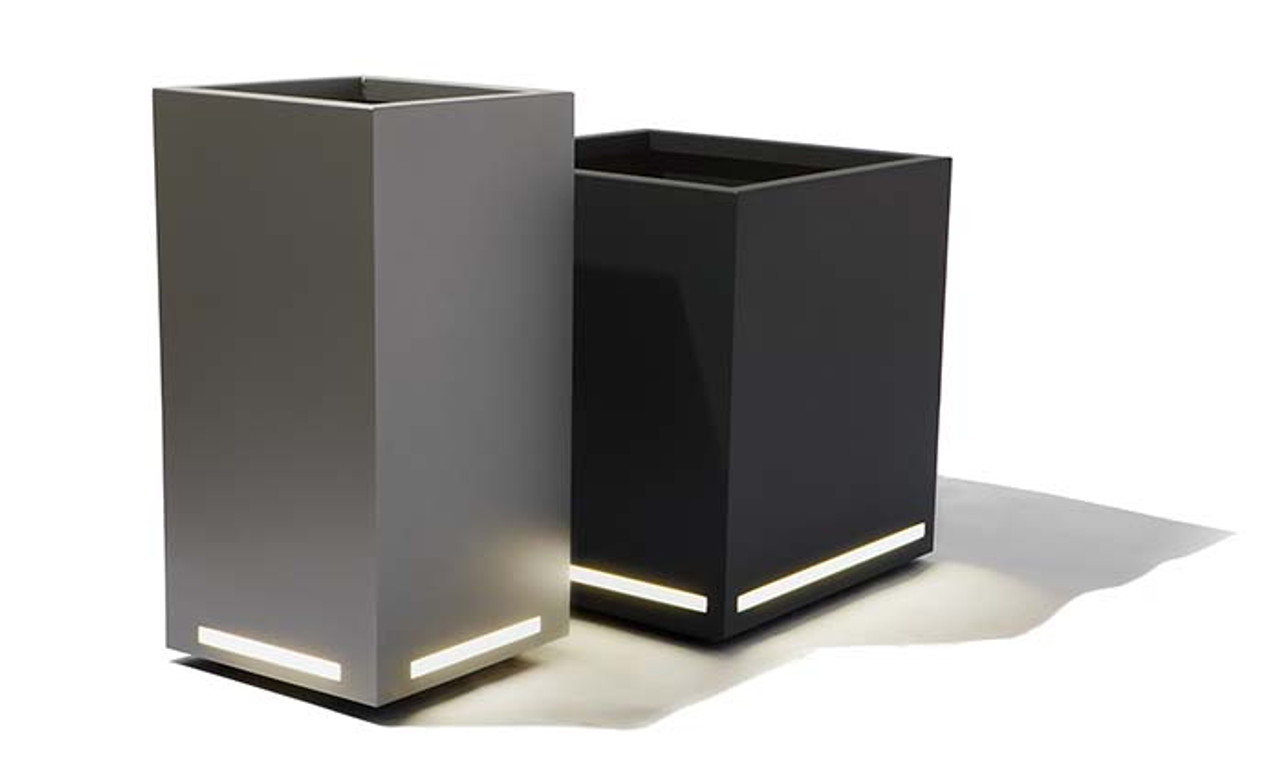
An illuminated planter combines planting and accent lighting in one architectural element. Instead of aiming a separate fixture at a container, integrated LED face panels make the planter itself part of the evening lighting composition. That can be useful at an entry, beside a patio, along a terrace edge, or in a commercial outdoor setting where the planting needs to remain visible after dark.
The specification work begins before material or color. First, decide what the light needs to do. Is the planter a focal point, a low-level wayfinding layer, or one element within a larger lighting plan? Then confirm the exterior exposure, power route, drainage, finish, and surface below the planter. Those choices determine whether an illuminated planter is a practical fit for the site.
The product measurements and lighting figures below come from the current Yard Couture Metal LED Planters listing; they are not universal LED-planter specifications. Compare the selected product’s technical documents before treating any rating, lumen output, panel size, or connection method as a project requirement.
Quick Answers
What is LED planter lighting?
It is integrated illumination built into a planter face or structure, so the planter contributes light as well as planting and spatial definition.
Does an IP67 rating make the complete planter waterproof?
No. An IP rating applies to the enclosure or component that was rated. Confirm which components are covered, including the LED panel, transformer, connectors, and wiring, and follow the selected product’s installation instructions.
Can an LED planter light a path by itself?
It can contribute low-level accent and wayfinding light. Do not assume product lumen figures meet required egress, accessibility, security, or task-lighting levels for a particular site.
Which material is easier to place near light-colored hardscape?
Powder-coated aluminum does not create iron-rust runoff. Natural-rust steel finishes can transfer color to light or porous surfaces, particularly while they are new.
What Integrated Planter Lighting Adds to an Outdoor Space
Separate landscape fixtures and illuminated planters do different jobs. A conventional uplight is designed to cast light onto a feature. An integrated planter panel makes the planter itself a visible source of ambient light. Used thoughtfully, that can help mark an arrival point, reinforce a seating zone, soften an edge between planting and paving, or keep a landscape composition legible at night.
The best results usually come from assigning each light source a role. A planter panel can provide a soft architectural layer; other fixtures may handle paths, stairs, doors, signage, or task areas. For public-facing and commercial spaces, the lighting plan still needs to address the site’s applicable safety, accessibility, and code requirements.
Read the Specifications in Context
IP Rating: Useful, but Not the Whole Installation
An IP rating measures an enclosure’s resistance to solids and liquids. The International Electrotechnical Commission explains the IP code as two numerals: the first describes protection from solids and the second describes resistance to liquids. In the IP67 shorthand, the 6 indicates no ingress of dust and the 7 refers to temporary immersion under the rating’s test conditions. Yard Couture lists the LED face panels on its metal LED planters as IP67-rated.
IP67 applies to the tested component, not automatically to the complete planter assembly or installation. Before ordering, request documentation that identifies which components were tested and the intended installation conditions. Confirm the rating and location of the LED panel, transformer, cable connections, and any optional controls. Outdoor exposure, irrigation, drainage, physical damage, and the product’s installation method all affect the finished system.
Lumens: Think Accent Layer, Not Floodlighting
Lumens measure visible light output. Yard Couture lists a 12-inch face panel with 30 LEDs and 180 lumens, and a 24-inch panel with 60 LEDs and 360 lumens. Those figures help compare panel lengths, but they do not by themselves predict how a complete site will look. Surface color, mounting position, surrounding darkness, spacing, planting, and nearby lighting all change the perceived effect.
For that reason, use illuminated planters as part of a layered layout rather than assuming one unit will solve every nighttime need. Repeating a compatible form at intentional intervals can create a calmer rhythm than scattering isolated sources of light around a site. Where a project depends on measured pathway, egress, or accessibility lighting, request IES photometric information, a photometric plan, or a site-specific lighting review instead of relying on panel lumens alone.
Rated Life: A Planning Figure, Not a Service Guarantee
The same product page lists an average rated LED life of up to 10,000 hours. As a simple use estimate, not a service guarantee, that equates to roughly 4.5 years at six hours of use each evening or 6.8 years at four hours. Actual service life can differ with operating conditions, controls, wiring, weather exposure, and the serviceability of the selected configuration. Ask the supplier how the rating was established and how replacement or service is handled before finalizing a long-term commercial installation.
Material Choice Changes the Site Decision
Material affects more than daytime appearance. It influences filled weight, finish stability, runoff planning, and how predictable the planter’s illuminated face will look over time. The right choice depends on the surface below, the desired design language, and whether a changing natural-rust finish is acceptable.
| Material | Finish, runoff, lighting effect, and site planning |
|---|---|
| Powder-Coated Aluminum | Finish over time: Provides a controlled powder-coated color. Runoff planning: No iron-rust runoff is expected from the planter material; confirm hardware, finish, and drainage details. Light-design implication: Offers a more predictable color backdrop for the LED panel. Placement consideration: Often suits stain-sensitive hardscape, rooftops, and locations where lower planter weight is valuable. What to confirm: Filled weight, finish selection, drainage, anchoring, and wind exposure. |
| Corten Weathering Steel | Finish over time: Develops a rust-toned patina that changes with exposure. Runoff planning: Rust-colored runoff can affect light or porous surfaces while the material weathers. Light-design implication: Creates a changing, rust-toned backdrop; review finish samples or project photos. Placement consideration: Often suits soil, gravel, or compatible darker surfaces with a planned drainage route. What to confirm: Runoff path, drainage, surface compatibility, filled weight, and patina expectations. |
| Mild Steel | Finish over time: Develops a natural-rust finish that continues to change outdoors. Runoff planning: Natural-rust runoff can affect light or porous surfaces. Light-design implication: Creates a changing, natural-rust backdrop; review finish samples or project photos. Placement consideration: Often suits projects seeking a raw steel appearance where color transfer is acceptable. What to confirm: Runoff path, drainage, surface compatibility, filled weight, and patina expectations. |
For a real-world view of the weathered finish, see the Yard Couture Cube Metal Planter Box in Corten steel below. The photographed cube is not illuminated; LED lighting is a custom option to confirm for a specific planter configuration.
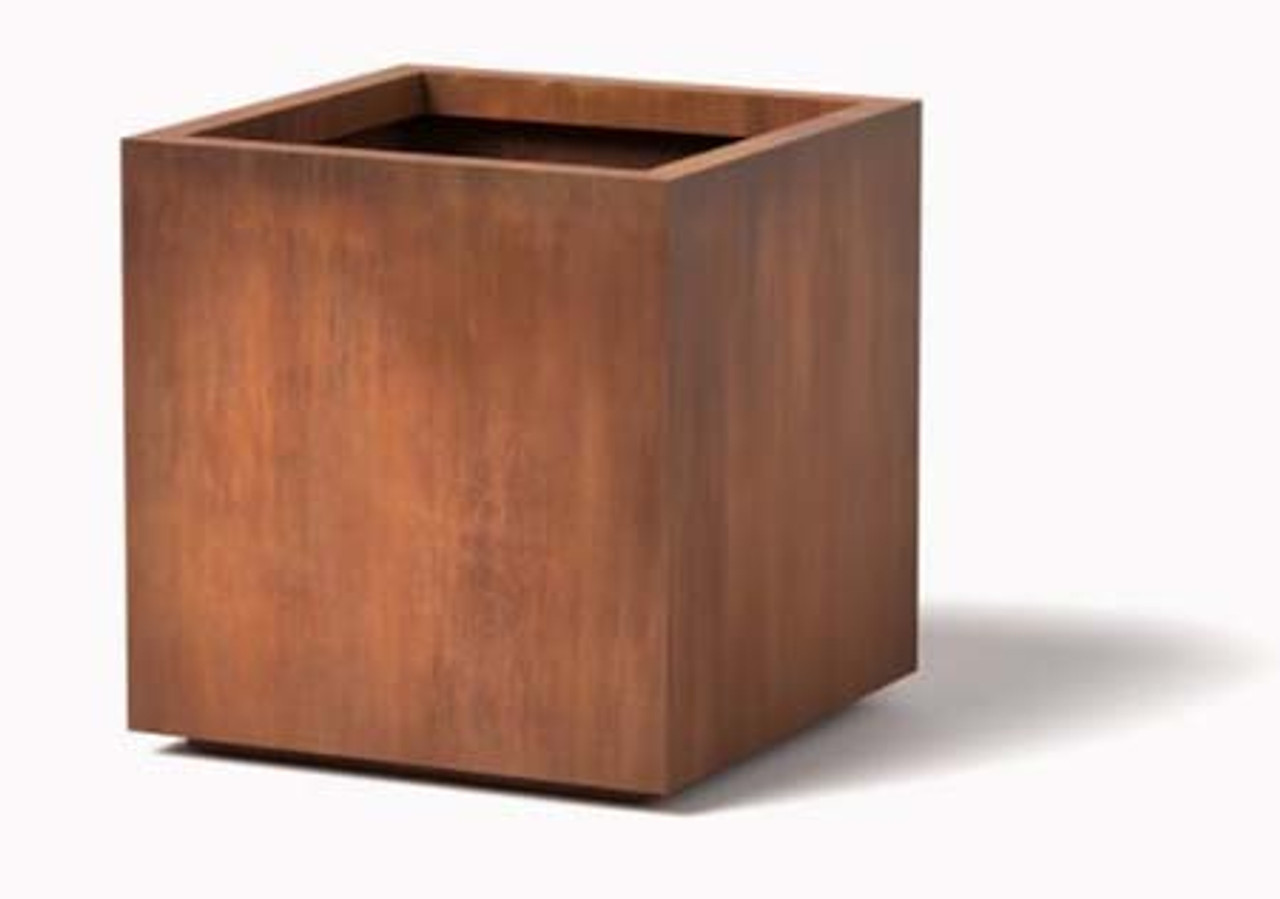
For a more detailed surface and drainage review, see Yard Couture’s guidance on protecting hardscape from Corten runoff. If the project must avoid rust-colored transfer altogether, a powder-coated aluminum finish may be the more appropriate starting point.
Weathering-steel composition and local exposure affect patina development and runoff behavior. For a design where the finish is critical, request a current material sample and a runoff-mitigation detail from the supplier instead of assuming every Corten-style product will weather in the same way.
Size the Planter and Light Panel Together
Planter scale and panel placement should be decided together. Yard Couture’s current standard LED planter sizes are small (17 by 17 by 18 inches high), medium (21 by 21 by 22 inches high), and large (27 by 27 by 28 inches high). The product page also states that LED panels are available in 12-inch increments on flat faces at least 15 inches wide.
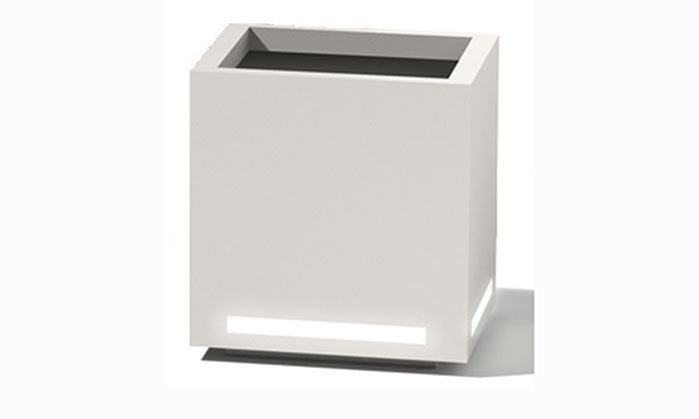
Use those numbers as a configuration check, not a universal spacing rule. A small planter may work as an entry accent, while a larger form can hold more visual weight at a terrace corner or commercial approach. For a custom rectangle, decide which face is meant to be seen at night and whether light belongs on one face, adjacent faces, or all exposed faces. The more directions a planter serves, the more important its electrical routing and finish consistency become.
Coordinate Planters With Fire Features Without Blurring Their Roles
Illuminated planters can complement a gas fire feature: flame provides a warm, moving focal point, while planter panels provide a steadier low-level architectural layer. This can be effective around a seating area, a hospitality patio, or a larger outdoor room, provided every source has a distinct role and the overall light level remains comfortable.
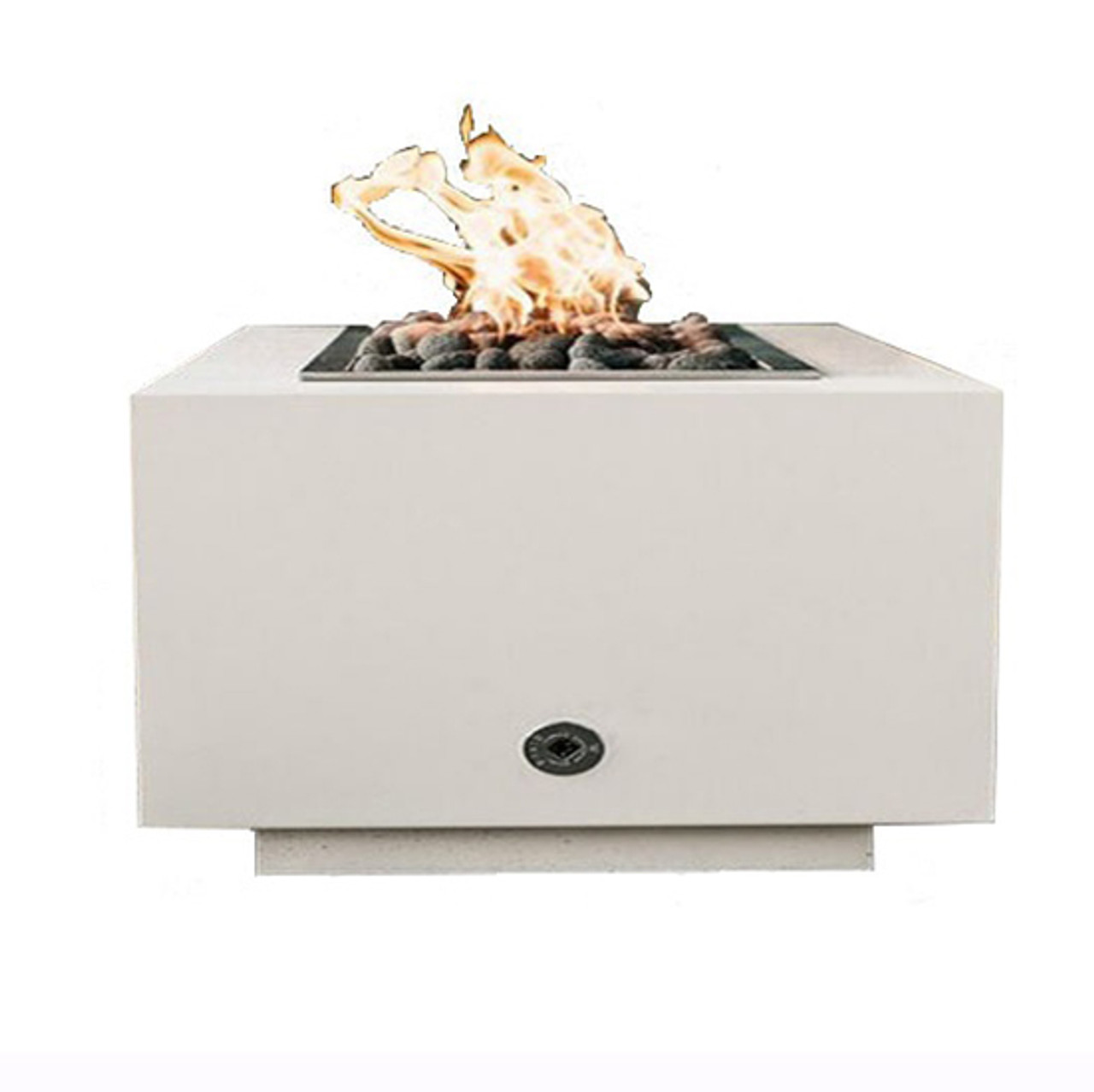
Keep the planning disciplines separate. A fire feature must be selected, installed, and operated according to its own fuel, clearance, ignition, and local-code requirements; planter panels do not replace any required path or egress lighting. Verify the selected fire feature’s clearance zones before locating a planter or its wiring nearby. When a scheme calls for both, coordinate the planter layout with the selected gas fire pit location early, before power, drainage, planting, and circulation patterns are fixed. Yard Couture’s Square Gas Fire Pit is one current gas-feature example to coordinate as a separate installation.
Electrical Planning: Confirm the System Before Ordering
Yard Couture lists its LED face panel system as 12-volt DC operation with a 110-volt transformer included. That product detail is a starting point, not an electrical layout. Confirm whether the proposed installation will use individual transformers or a compatible low-voltage design, where transformers and connections will be located, and which components are suitable for the planned exterior conditions. The transformer and service connections need a location that is accessible and appropriate for their listed use; do not place them in a planter’s soil zone or assume its interior or drainage area is suitable.
Wire gauge, run length, voltage drop, burial method, transformer loading, connectors, and local code requirements need to be resolved for the actual project. Do not bury a connector or enclosure unless the selected product documentation and the electrical plan allow that use.
In the United States, a qualified electrician should assess the line-voltage supply, outdoor receptacle, required ground-fault protection, weather-rated equipment, and any in-field connections. The U.S. Consumer Product Safety Commission’s GFCI guidance is a useful general safety reference, but it does not replace site-specific electrical design or local inspection requirements.
For commercial work, coordinate the electrical plan with the project team before planters are fabricated, planted, or placed. Late changes can affect face-panel location, access for service, drainage, conduit routing, and the final arrangement of the landscape.
Planting, Drainage, and Ongoing Care
Lighting does not change the planter’s basic horticultural needs. Yard Couture states that its LED planters are designed for direct planting and ship with standard 1-inch drain holes unless a different drainage arrangement is specified. Confirm the drainage plan for the plant palette, irrigation method, surface below, and any roof or terrace waterproofing before choosing an option without drainage openings.
After installation, inspect the visible light panels, accessible cables, connections, and planter surface after weather events and during routine landscape care. Look for physical damage, unexpected water accumulation, changed light output, or runoff reaching a vulnerable surface. Do not open, modify, seal, or repair electrical components unless the product documentation permits it and the work is performed by a qualified professional.
Before You Finalize a Configuration
- Lighting role: Identify what the planter lighting should accomplish and what other fixtures will handle paths, steps, doors, signs, or task areas.
- Material and surface: Match the finish to the setting, especially where natural-rust runoff could reach pale or porous hardscape.
- Planter configuration: Confirm the finished dimensions, panel location, number of illuminated faces, drainage arrangement, and filled weight.
- Light quality: Ask for the panel’s color temperature, control options, and a project mock-up or photometric information when the site has measured lighting requirements.
- Power and service access: Map the transformer, power source, wiring route, required electrical review, and a practical way to access components later.
- Project coordination: Check planting, irrigation, fire-feature clearances, circulation, and local requirements as one site plan rather than separate add-ons.
For a non-standard size or an integrated-lighting concept, review Yard Couture’s custom planter add-on options and provide the proposed dimensions, exposed faces, power information, surface material, and drainage needs when you request project-specific guidance.