
Corten Steel Landscape Edging: How to Choose Height, Compare Materials, and Plan the Installation
Posted by Admin on 2nd Oct 2026
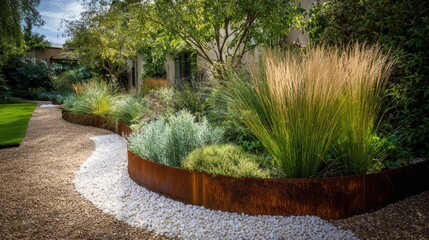
Corten steel landscape edging can give a lawn edge, planting bed, gravel path, or tree ring a clean, deliberate line without adding a bulky border. It is not the right choice for every site, though. The finish changes as it weathers, new steel can transfer rust-colored runoff, and the selected height needs to match what the edge is actually meant to contain.
Choose the site and function before choosing the finish. The useful questions are simple: Is this a low visual edge or a raised planting wall? Will rain or irrigation carry runoff over a light patio? Does the layout need gentle curves, crisp straight runs, or both? Those answers do more to determine a successful installation than a material’s color alone.
Three Decisions to Make Before You Order
- Decide whether you need edging or a raised bed. Landscape edging defines a boundary and helps contain loose material. It is not a substitute for a purpose-built raised planter or a retaining solution where the site has meaningful soil pressure or grade change.
- Trace where water will go. New weathering steel can release rust-colored runoff. Soil, gravel, and darker compatible surfaces are generally easier settings than pale concrete, porous pavers, tile, or decking.
- Choose height around the finished grade. Consider how much of the edge must remain visible and what it must contain after mulch, gravel, turf, and slope are accounted for. Do not select a profile by overall height alone.
What Makes Corten Different From Ordinary Steel
Corten is commonly used as a name for weathering steel: a material formulated to develop an oxide patina when exposed to alternating wet and dry conditions. According to SSAB’s weathering-steel guide, the patina changes from orange-brown toward a darker brown as it develops, but the pace and final color depend on the site. That is why a newly installed edge should be treated as a changing material rather than a finished brown product on day one.
The attraction is not only the color. A metal edge can create a narrow, continuous separation between materials that tend to mingle: grass and mulch, gravel and planting soil, or a path and a bed. Weathering steel is not corrosion-proof, and the final result depends on the installed system’s thickness, anchoring, connection method, ground conditions, exposure, and layout, not the word “Corten” alone.

Corten Steel Edging vs. Other Border Materials
There is no universal best edging material. The sensible choice depends on the surface below, how much visible edge the design calls for, the amount of containment required, and whether a changing rust finish is an asset or a liability.
| Material | Appearance, best fit, and planning constraint |
|---|---|
| Corten weathering steel | Appearance: Develops a rust-toned patina that continues to vary with site exposure. Best fit: Landscape beds, lawns, gravel, and projects where a narrow architectural edge is meant to be visible. Consider: New material may leave rust-colored runoff; plan the water path and avoid using it where staining is unacceptable. |
| Powder-coated aluminum | Appearance: Provides a controlled, non-rusting color finish. Best fit: Light-colored patios, decks, rooftops, entrances, and other areas with little tolerance for rust transfer. Consider: Verify gauge, anchoring, finish care, and suitability for the expected traffic and curves with the specific product’s specifications. |
| Plastic or composite edging | Appearance: Usually remains visually discreet until wear, UV exposure, or movement affects it. Best fit: Lower-profile borders where material flexibility and a less visible edge are the priority. Consider: Review rigidity, connection details, and long-term appearance for the specific product rather than assuming all plastic edges perform alike. |
| Concrete curbing | Appearance: Creates a continuous, substantial border with a fixed finish. Best fit: Projects seeking a permanent, monolithic edge rather than a thin, adaptable metal line. Consider: It is less adaptable after placement; joints, drainage, movement, and site access should be settled before installation. |
Choose Height by Function, Not a Generic Number
Edging height should be considered in relation to the finished ground on both sides of the border. A low lawn divider may need only enough exposed height to make mowing and material separation manageable. A mulched bed or gravel path may need more visible containment. If the edge must hold back a substantial change in soil level or resist lateral soil pressure, it has moved beyond a simple border decision and may require a raised planter, retaining wall, or site-specific landscape solution.
For steel products, a lower gauge number generally indicates thicker material, but compare the stated material and system details rather than gauge alone. Fourteen-gauge steel is often about 1.9 mm thick, though the actual product specification controls. As one supplier example, Yard Couture’s current 14-gauge Corten landscape edging is offered in 6-inch-high, 59.5-inch-long sections with four included stakes per section. Use the selected product’s specifications and installation directions to decide how it will be set at grade; the visible and buried portions should suit the actual surface materials, layout, and anchoring system. This product has a five-section minimum order; account for its slight connection overlap when calculating coverage.

If the project calls for a taller planted volume instead of a narrow divider, browse raised planter beds rather than trying to make landscape edging perform as a retaining or elevated-growing structure. The Corten Steel DIY Raised Rectangle Planter Box is one open-bottom raised-bed option for a planted area.

Where an installation must resist significant soil pressure, retain a grade change, or create an elevated planting volume, obtain site-specific guidance from a qualified landscape or structural professional. Decorative edging should not be treated as an engineered retaining system.
Measure the Layout Before You Calculate Quantity
Start with the centerline of the finished border, not the outside edge of a bed. Mark straight runs with a string line and use a hose or other temporary guide to judge curves from normal viewing distance. Measure the final path after adjustments. That process catches awkward radii and misplaced corners before any metal is ordered or installed.
- Include every return, tree ring, curve, and connection in the measurement.
- Allow for the connection detail specified by the system. Yard Couture’s sections overlap slightly at their connections, so the nominal section length is not the same as finished coverage.
- Confirm the system’s minimum bend radius and whether a corner kit or field cutting is required. Tight curves and cut sections can have product-specific limits.
- Map nearby downspouts, irrigation, hardscape joints, and low spots while the layout is still easy to change.

Plan the Installation Around the Site
A straightforward metal-edging installation generally follows a simple sequence: establish the line, prepare the ground as the product requires, position and connect the sections, secure them with the supplied or approved anchors, then backfill and check the finished alignment. Lay out the full run before digging; adjusting a hose or string line is much easier than revising installed steel.
- Locate first. In the United States, contact 811 before you dig or use the applicable local utility-location service. Even shallow work can encounter buried lines; follow the local markout instructions before breaking ground.
- Mark the finished line. Check it from the usual viewing angles and make sure the line has room to avoid irrigation heads, downspouts, walls, and hardscape edges.
- Follow the selected system’s installation instructions. Ground preparation, section overlap, curve limits, stake placement, and cutting requirements vary by product. Wear suitable work gloves and eye protection when handling metal edging, particularly around sharp cut edges or burrs.
- Check the grade before final backfill. Confirm the top edge looks intentional from both sides, connections sit as the manufacturer intends, and water will not pool against the installation.
Avoid unapproved modifications. Cutting, welding, substitute anchors, or coatings can change the way an edging system performs and may affect its corrosion behavior or warranty coverage; check the product warranty before modifying a system. When a layout requires power cutting or welding, use a qualified installer with the appropriate PPE, ventilation, and site controls. For a non-standard radius, complex corner, or a site where the edging borders hardscape, consult the product manufacturer or a qualified landscape professional before modifying the system.
Weathering, Runoff, and Climate: Plan the Surface, Not a Countdown
New weathering steel can shed rust-colored material when rain, condensation, or irrigation moves across its surface. The amount and duration depend on exposure, wet-dry cycles, drainage, shade, and the surrounding materials. Avoid a fixed “patina timeline”: visible development can take months to years and is highly site-dependent.
Give extra attention to light-colored or porous concrete, natural stone, tile, composite decking, and surfaces where water collects. A gravel or soil buffer, a revised drainage route, or a different material may be a better answer than hoping runoff will be unnoticed. Yard Couture’s guide to protecting hardscape from Corten runoff explains why surface type, runoff path, and irrigation overspray matter.
Do not apply sealers, paint, chemical cleaners, or rust treatments to the edging or the nearby surface unless the relevant manufacturer confirms that the product is compatible. If the design cannot accept any rust-colored transfer, choose a non-rusting material for that portion of the project.
Weathering steel performs through a changing patina, so local exposure affects both the pace of the finish and the way water moves across the material. Frequent wet-dry cycles can speed visible change; sheltered areas may weather differently. In locations with persistent standing water, unusual chemical exposure, or salt-laden coastal air, confirm material suitability with the manufacturer rather than assuming every weathering-steel product behaves the same way.
That site review should also include irrigation. A head that repeatedly wets one small stretch of edging can create a different appearance and direct runoff toward the wrong surface. Adjust the installation route or irrigation pattern before the edge becomes part of a finished landscape.
Care Expectations After Installation
Corten edging is intended to age outdoors; it is not a painted product that needs a uniform finish. Inspect the system at least seasonally and after major storms: clear leaves, mulch, and debris that are holding moisture against the edge, check the adjacent surface after rain or irrigation, and keep the intended drainage path open. If a connection or anchor begins to move, use the manufacturer’s approved remedy rather than forcing the section back into place or adding improvised hardware.
For a project that coordinates edging with planters or other outdoor metal elements, review Yard Couture’s finish options to compare natural-rust steel with powder-coated aluminum. For questions about a specific layout, provide the planned border length, photos of nearby surfaces, expected grade changes, and drainage conditions when you contact Yard Couture.