
How to Choose Metal Raised Garden Beds: Corten Steel, Aluminum, Sizing, and Food-Growing Considerations
Posted by Admin on 22nd Sep 2026
A metal raised bed is a long-term landscape feature as much as it is a place to grow food. The best choice depends less on whether metal is better than wood and more on where the bed will sit, how much soil depth your crops need, how you want to work around it, and whether the surface can tolerate Corten's weathering runoff. Start with those constraints, then choose the material and shape.
Quick answer: Choose Corten when a changing rust-toned finish and a compatible runoff area suit the site. Choose powder-coated aluminum when color transfer would be unacceptable on the surrounding surface.
This article provides general planning information. Product specifications, material options, site conditions, and installation requirements vary. Confirm the details of the selected raised bed before ordering.
Start With the Decisions That Shape the Purchase
- Match the material to the site.
- Corten suits locations where a rust-toned patina and early runoff will not compromise the surrounding surface. Powder-coated aluminum is often the more practical option for pale patios, decks, balconies, and other areas with little tolerance for color transfer.
- Lay out the footprint before settling on length.
- Plan the bed, paths, and reach together. A bed that is too wide invites soil compaction because it is difficult to work from the edge.
- Set soil depth according to crops and construction.
- A bottomless bed sits on prepared soil and lets roots continue into the ground below. A bottomed planter contains its own growing medium, so it needs enough usable internal depth and a drainage plan of its own.
- Plan water before delivery day.
- Confirm sun, irrigation, drainage, slope, and the runoff route before committing to a location, especially with Corten on hardscape.
Why Choose a Metal Raised Bed?
Metal can be a sensible choice when you want a permanent-looking edge, a material that does not rot like wood, and a cleaner architectural line. Raised-bed gardening can make planting and weeding easier to reach, help prevent people from walking on the growing soil, and provide a solution for poor native soil. Raised beds can also warm more quickly in spring and lose moisture faster in hot weather, so the irrigation plan matters as much as the frame material.[1]
A metal bed is not automatically the right answer for every garden. It usually costs more upfront than a simple wood frame, and its weight, finish, delivery method, and installation surface require deliberate planning. The value comes from choosing a configuration that fits the site for years rather than rebuilding a poor fit after one season.
Corten Steel or Powder-Coated Aluminum?
This is the material decision most likely to affect the site. Corten is a weathering steel. Under alternating wet-and-dry exposure, it develops a rust-like oxide patina that can slow further atmospheric corrosion. Its color and rate of change depend on local conditions, so do not choose it on the assumption that it will reach a particular color on a fixed schedule.[2]
Yard Couture's planter finish options identify Corten steel and powder-coated aluminum among the available materials. Treat the individual product page, rather than a general material description, as the source of truth for the selected bed's alloy, gauge, finish, dimensions, assembly, and care requirements.
| Decision Factor | Corten Steel | Powder-Coated Aluminum |
|---|---|---|
| Appearance over time | Develops a rust-toned patina. The color and timing vary with exposure and site conditions. | Keeps a more consistent painted appearance. Available colors and finishes depend on the product. |
| Surface and runoff | New weathering steel can release rust-colored runoff that may mark light or porous hardscape. | Does not create iron-rust runoff. Drainage and finish-care requirements still need review. |
| Food-growing due diligence | Confirm the selected bed's material, finish, fasteners, liner, drainage design, and manufacturer guidance before growing edible plants. | Confirm the selected bed's alloy, coating, fasteners, liner, drainage design, and manufacturer guidance before growing edible plants. |
| Handling | Often the heavier choice. Verify component weights and the delivery route. | Usually easier to handle than steel. Confirm the bed's empty and filled weight for the site. |
| Best-fit setting | Garden soil, gravel, or another compatible location where weathering is part of the design. | Locations where color transfer is unacceptable, including light hardscape, decks, balconies, or rooftops. |
| Before ordering | Confirm the drainage route, surface tolerance, assembly, and product-specific weathering guidance. | Confirm the coating, drainage, loaded weight, anchoring, assembly, and product-specific care instructions. |
When Corten Is a Better Fit
Corten works best when the changing finish is welcome and the installation gives runoff somewhere compatible to go. Soil, gravel, and darker landscape areas are generally easier to plan around than a new pale patio. Bottomless beds installed directly over a prepared planting area also avoid directing drainage across finished hardscape.
The Corten Steel DIY Raised Rectangle Planter Box is a current open-bottom option for a prepared garden area. Its modular panels are assembled on-site, so the product dimensions and delivery path should be checked before ordering.

When Aluminum Is the More Practical Choice
Choose powder-coated aluminum when the design needs a stable color and the site cannot accept rust-colored transfer. It is particularly worth considering around light stone, concrete, wood or composite decking, rooftop terraces, and other finished surfaces. A rust-free material does not remove the need for drainage, structural support, anchoring, or product-care planning.
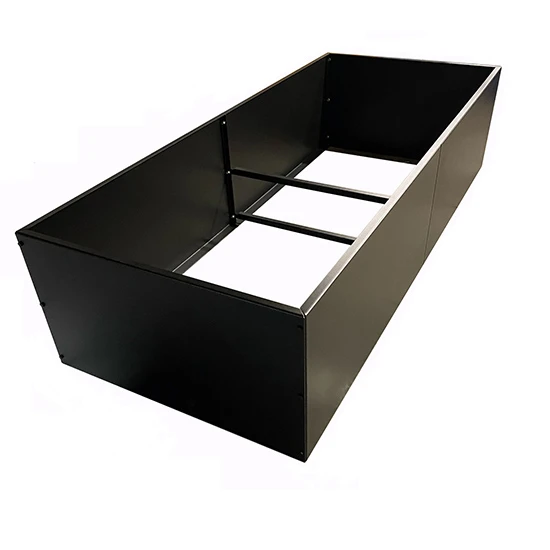
The Aluminum Rectangular DIY Bottomless Planter combines an open-bottom design with marine-grade aluminum and a powder-coated finish. It is a relevant alternative when you want a raised-bed form without iron-rust runoff.
Food-Growing Questions Need Product-Specific Answers
Do not treat a material name or a weathered appearance as a food-growing certification. If you plan to grow edible plants, review the selected product's base material, coating or finish, fasteners, liner, and drainage design with the manufacturer. For existing-site concerns, such as a history of contamination or unusual soil chemistry, consider a soil test through a local extension service before planting.
Choose the Shape Around Access, Not Just Appearance
Rectangles are efficient for orderly rows and can be easy to repeat along a fence or path. Square beds work well as compact focal points. Round beds give access from all sides, while L-shaped and U-shaped layouts can use a corner or create a more enclosed kitchen-garden arrangement. Tiered or modular systems can solve an elevation change or create a strong focal point, but only if the extra growing area will be used.
Before choosing a shape, mark the footprint on the ground with a hose, tape, or stakes. Walk the paths you expect to use with a wheelbarrow or watering can. That simple test often reveals whether a more elaborate layout is helping the garden or making routine work harder. Yard Couture's raised planter beds collection shows the current range of available configurations.
For a layout designed to keep planting areas within reach, compare the Yard Couture U-Shape Keyhole Raised Garden Bed. Its center opening is intended to provide access to the surrounding growing space without stepping on the soil.

Size for Reach, Root Space, and Working Height
Width Comes First
For a bed worked from both sides, Utah State University Extension recommends a width of 3 to 4 feet so the center can be reached without stepping on the soil. If one long side is against a wall or fence, use a narrower bed that you can manage from the accessible side. Leave enough pathway for normal tasks and for the equipment you use.[1]
Height and Depth Are Different Decisions
The frame height affects bending and kneeling. Usable soil depth affects what the bed can support. Utah State University Extension advises a framed raised bed of at least 6 to 12 inches for the rooting depth of many vegetables. For beds shallower than 12 inches, the same guidance recommends an open bottom and preparation of the soil below so roots can continue into it.[1]
For deeper-rooted crops or a bottomed planter, check the available soil depth rather than relying on the outside height alone. A tall bed can be easier to tend, but it also requires substantially more growing medium and creates more loaded weight. Match the final depth to your crop plan, the bed design, and the condition of the soil underneath.
Place the Bed Before You Order It
Choose the sun and water route before choosing a finish. Utah State University Extension recommends at least 6 to 8 hours of direct daily sunlight for maximum fruit and foliage production. The bed also needs a reliable water source, and drip irrigation is commonly an efficient option for raised beds.[1]
For Corten, follow rain, irrigation, planter drainage, and roof runoff across the actual site. New weathering steel can leave rust-colored runoff on vulnerable surfaces. This is a placement issue, not just a finish issue. Yard Couture's guide to protecting hardscape from Corten planter rust runoff covers surface type, drainage path, slope, and irrigation overspray.
For a balcony, roof, elevated deck, or finished terrace, confirm drainage and the support required for the filled bed before placement. The final load includes the planter, soil, plants, and retained water, not only the empty frame.
Prepare for Delivery, Assembly, and Long-Term Care
Confirm the delivery route before placing the order, especially for larger steel components or a fully assembled product. Measure gates, corners, stairs, and the final access path. Then review the specific product's assembly instructions, hardware, site-preparation requirements, and recommended base. Do not assume that one metal-bed kit is assembled or installed the same way as another.
Once installed, care is mostly about the garden and the drainage system. Refresh the growing medium as your planting plan requires, keep drainage openings clear where the bed has a bottom, and inspect the area after rain or irrigation. With a new Corten bed, address runoff routes early rather than waiting for repeated staining. Do not apply a coating, cleaner, or sealant unless the product manufacturer and the surface manufacturer both confirm it is appropriate.
Budget for the Whole Installation
The purchase price is only one part of the decision. Material, footprint, height, shape, finish, customization, soil volume, irrigation, delivery access, and site preparation can all change the project cost. A simple rectangle may be the best use of the budget when the garden needs productive growing space. A tiered or modular layout may be worth more when it solves a real layout or accessibility requirement. Check the current product page and quote rather than relying on a published price from an older guide.
Metal Raised-Bed Planning Checklist
- Can the chosen surface and drainage route handle Corten runoff, or is aluminum the safer material choice?
- Will the bed have enough usable soil depth for the plants you plan to grow?
- Can every planted area be reached without stepping into the growing soil?
- Does the site receive the needed sunlight, and is there a workable irrigation plan?
- Can the delivery route, supporting surface, and assembly space accommodate the selected bed?
- Have you confirmed the current product dimensions, material, finish, assembly, and care guidance for the exact configuration?
If a standard footprint does not suit the site, collect the desired dimensions, a simple sketch, and photographs of the surface and access route before contacting Yard Couture about a custom raised-bed configuration. That information makes it easier to compare material and layout options without overlooking drainage, access, or surface protection.
Product availability, specifications, images, finishes, pricing, and lead times may change. Confirm current details on the individual product page and with Yard Couture before ordering or beginning installation.