
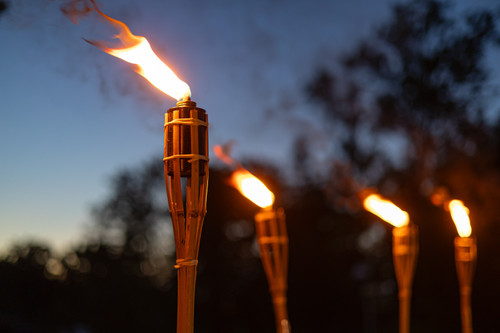
Torches Guide: Fuel, Ignition & Mounting
Posted by Admin on 9th Nov 2026
Walk a pool deck or garden path at dusk and you notice how quickly the stone and concrete go flat once the light drops. Something vertical brings the space back, and a line of flame does that well. Gas tiki torches sit between landscape lighting and fire features: they are plumbed, permanent fixtures that put a controlled flame up on a pole or post along paths, pool edges and patios. They are a different project from the oil-filled bamboo torches you set out for a summer party.
If you are planning a run of torches for a home patio or a commercial pool deck, the decision comes down to four choices made in order: fuel, ignition, mounting and placement. Head style and finish matter too, but they are easier to settle once those four are clear. The five models referenced below are all in Yard Couture's Gas Tiki Torches collection.
What Permanent Gas Tiki Torches Are
A permanent gas tiki torch is a flame fixture connected to a gas supply and built for long-term installation, either on a pole set in the ground or on a deck, surface or existing post. Yard Couture's collection page describes these torches as built for permanent in-ground or surface-mount installation and points to paths, pool decks, entertainment areas, resort pools and restaurant patios as typical settings. Treat the purchase like a gas appliance that gets specified and roughed in, not like a seasonal accessory.
The contrast with an oil torch explains most of the appeal. An oil torch is a refillable canister with a wick. You pour in torch fuel, light the wick and repeat the routine every few evenings. A gas torch removes the refilling and the wick, and you set the flame at a valve instead of trimming it. In exchange, it stays where it is installed, and the work happens before the first evening: a gas stub at every location, plus wiring for electronic models.
A torch is also not a small fire pit. A fire pit is a place people gather around for warmth. A torch is a vertical accent used to mark a path, frame an entry or give a pool edge some rhythm. Many outdoor plans use both, but they solve different problems.
Natural Gas vs Propane Tiki Torches
Make the fuel decision first, because every model in the collection is ordered as either a natural gas (NG) or liquid propane (LP) version. Order the torch for the fuel available at your site. If you might switch fuels later, ask the manufacturer about an approved conversion before buying; do not assume the two versions are interchangeable.
Natural gas tiki torches make the most sense when a gas line already reaches the area or when trenching is happening anyway, such as during a patio renovation or new construction where gas is going to an outdoor kitchen or a fire feature. Once the line is in, there is no tank to watch or refill.
Propane tiki torches fit properties without natural gas service. The supply still needs planning: The Outdoor Plus manual requires a regulated propane source, and your supplier and installer must agree on tank placement, access, refilling, and the gas route to each torch. These permanently installed LP models still need gas piping; propane does not turn them into portable oil-style torches.
Whichever fuel you choose, your installer confirms the supply pressure against the range printed in the manual for your specific torch. It is part of the licensed connection, not a homeowner task. Fixed gas piping is generally governed by local code, which in many places is based on the NFPA 54 National Fuel Gas Code, and propane storage and piping by the NFPA 58 LP-Gas Code, along with any local amendments.
Match Lit vs Electronic Ignition
Ignition decides how you will use the torches every evening, and it changes what the installer roughs in.
Match-lit torches need no ignition wiring, but you light and shut off each fixture by hand. Follow the lighting, leak-check, flame-adjustment, and shutdown procedures in the manual supplied for your exact torch. The The Outdoor Plus match-lit torch manual (PDF) also warns that the needle valve becomes hot on versions fitted with one. Follow its handling precautions, and do not substitute a general lighting sequence for the selected model’s procedure.
Electronic ignition lets the torches start from a switch or another compatible control your installer wires in. The Fire by Design electronic models use 24 VAC, with a hot-surface igniter and flame sensing that controls the gas valve. The Fire by Design tiki torch manual (PDF) calls for electrical conduit and recommends 12-gauge low-voltage wire for hardwired installations. It states that a standard 100 VA transformer powers three torch heads and a 75 VA transformer powers two. Have your installer and electrician confirm the transformer, wiring, and control layout for the selected models; do not connect a 24 VAC head directly to household line voltage.
Yard Couture’s Black Cone and Copper Cone listings describe their all-weather electronic ignition as engineered to stay lit in winds up to 55 mph. That is a performance claim for those electronic systems, not an operating recommendation for windy conditions or a rating for the Fin Style, match-lit torches, or other brands. Follow the manufacturer’s weather restrictions. In this collection, the three Fire by Design torches offer manual or electronic ignition; the two The Outdoor Plus listings are match lit.
Two torches beside a back step are easy to light by hand. Six torches along a long pool deck, lit most evenings, are a strong case for electronic ignition.
Mounting Options for Gas Tiki Torches
Mounting is where the product and the site have to agree, so walk the property with these options in mind before you order.
In-Ground Pole
An in-ground pole gives the familiar elevated torch profile. The Fire by Design listings offer an optional black powder-coated aluminum pole; the Copper Cone listing specifies an 80-inch pole. Its manufacturer manual illustrates a 12-inch-deep base-pole rough-in with a 1/2-inch gas stub and conduit for electronic models. That is a manufacturer installation example, not a universal foundation or burial-depth rule for every site. Have the installer check the exact system and local requirements. The Outdoor Plus Cyclone listing describes an optional post with a 16-inch tapered anchor and lists an 80-inch total height. Its component-length figures are inconsistent, and the Woven listing gives a different total height, so confirm the selected post length and assembled torch height before ordering.
Deck or Surface Mount
The Fire by Design pages offer an optional deck mount, and The Outdoor Plus pages offer an optional deck post mounting plate. A wood deck, a concrete pool deck and a paver path each anchor differently, so tell your installer what the surface is made of and how it was built before you order hardware. A deck mount is a hardware option, not approval for every deck or surface; the exact model’s instructions and local requirements still determine whether that location is permitted.
Existing Post or Column
This is where The Outdoor Plus base options matter. On the Cyclone and Woven pages, the Original TOP base has a 3/8 inch flared gas inlet and a built-in needle valve, and it fits a 2 1/2 inch post with hex bolts. Yard Couture's Cyclone page notes it is a good option when the gas line runs inside the post. The TOP-Lite base takes a 1/2 inch inlet with a manual ball valve and suits a stubbed-in gas pipe. Those are different rough-ins, so choose the base after your installer has seen where the gas will come up.
Before you order, gather the dimensions that matter: head size (the Copper Cone head is listed at 14.25 inches tall by 7 5/8 inches wide), overall height with the pole, inlet size and type (the Copper Cone lists a 1/2 inch FIP inlet), and post compatibility. Poles, posts and mounts are listed as options or sold separately on these pages, so add the mounting hardware to the same order instead of discovering the gap when the heads arrive.
Head Styles and Materials
Once the practical choices are settled, the head style is a design decision about how the flame looks by night and how the fixture reads by day.
Fire by Design Black Cone
The Black Cone Gas Tiki Torch by Fire by Design combines stainless steel and aluminum with a black powder-coated finish. Its dark cone gives a clean silhouette in daylight. The listing offers natural gas or propane and manual or 24 VAC electronic ignition, with a listed maximum output of 25,000 BTU/h. Select the pole or deck mount separately where offered.
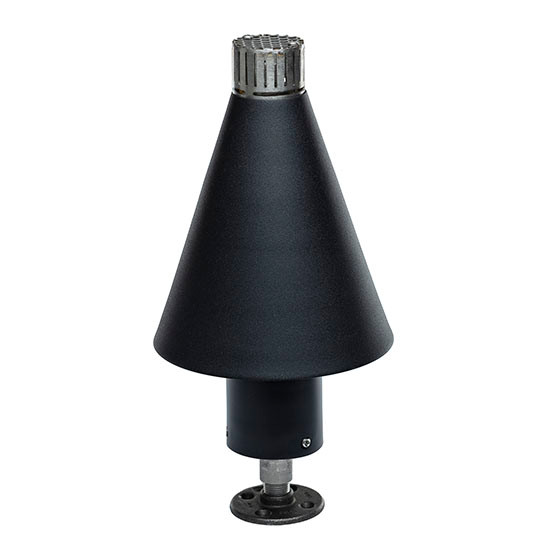
Fire by Design Copper Cone
The Copper Cone Gas Tiki Torch by Fire by Design has a spun copper cone with a stainless steel base and burner. The listing gives an output of 25,000 BTU/h and a head size of 14.25 inches tall by 7 5/8 inches wide. Copper changes color outdoors; the exposure determines how quickly it weathers and the final shade. Its optional 80-inch pole and separately sold deck mount need to match the site plan.

Fire by Design Fin Style
The Fin Style Gas Tiki Torch by Fire by Design uses steel fins around a stainless steel burner for an architectural profile. It offers natural gas or propane, with manual or electronic ignition. Yard Couture’s listing does not state a heat output, but the current Fire by Design manual (PDF) lists the Fin Style models at 25,000 BTU/h. Confirm that specification and the mounting accessories against the exact unit ordered.
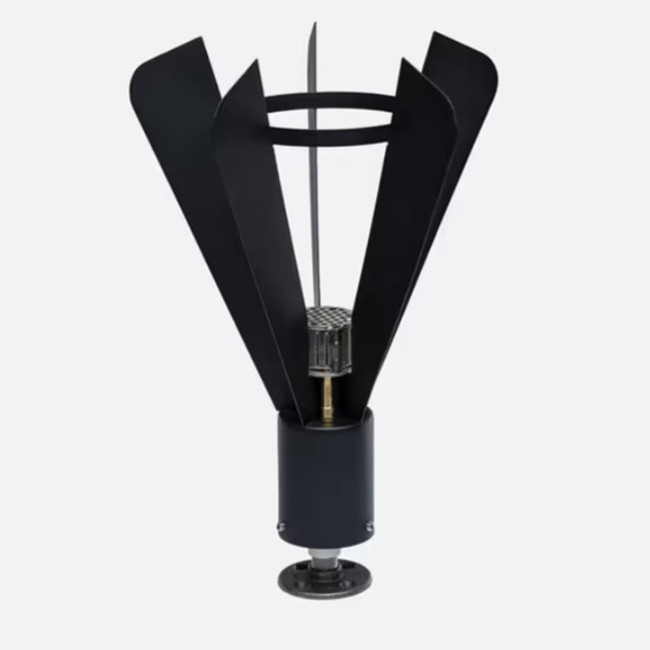
The Outdoor Plus Cyclone
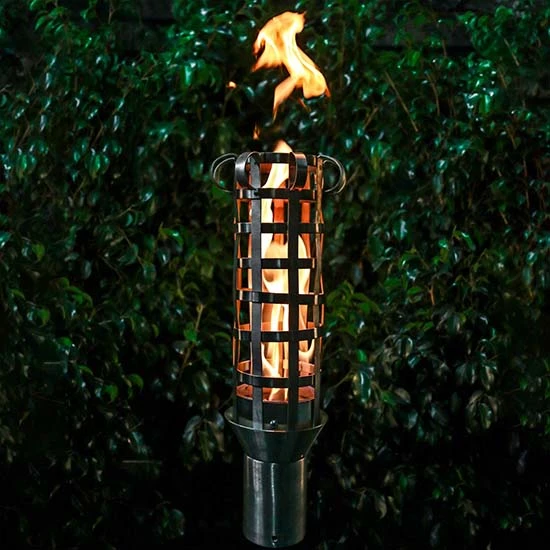
The Cyclone Gas Fire Torch by The Outdoor Plus has a tangled 304 stainless steel basket on a stainless steel base. The linked listing offers match-lit natural gas and propane versions. Choose the Original TOP or TOP-Lite base to match the post and inlet arrangement. Published output figures conflict, so ask Yard Couture to confirm the selected unit’s output before using it to size the gas supply.
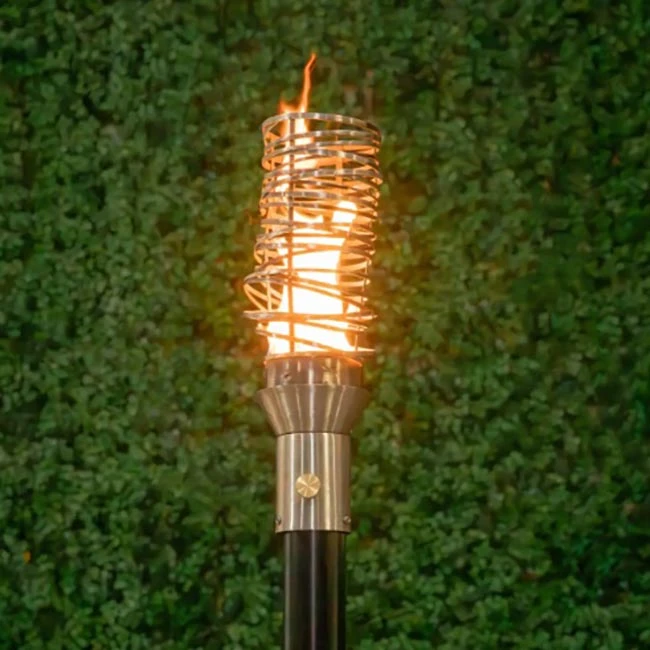
The Outdoor Plus Woven
The Woven Gas Tiki Torch by The Outdoor Plus gives the head a woven basket profile and is listed with a 304-grade stainless steel base. It offers match-lit natural gas or propane and Original TOP or TOP-Lite base choices. Basket material, output, and head dimensions differ between the retailer’s descriptions and the manufacturer’s page. Confirm those specifications and the assembled height for the exact configuration rather than assuming every pictured version is stainless steel.
Comparing the Five Gas Tiki Torches at Yard Couture
Compare the five models against your fuel, ignition, and mounting plan. The table uses the linked product listings, with the manufacturer’s Fin Style output noted separately. Confirm unresolved specifications before ordering.
| Model | Specifications and options |
|---|---|
| Fire by Design Black Cone | Fuel: NG or LP. Ignition: Manual light or 24 VAC electronic. Materials: Stainless steel and aluminum, black powder coat. Mounting: Optional pole, optional deck mount. Output: 25,000 BTU/h maximum. |
| Fire by Design Copper Cone | Fuel: NG or LP. Ignition: Manual light or 24 VAC electronic. Materials: Spun copper cone, stainless steel base and burner. Mounting: Optional 80 in pole, deck mount sold separately. Output: 25,000 BTU/h. |
| Fire by Design Fin Style | Fuel: NG or LP. Ignition: Manual light or 24 VAC electronic. Materials: Steel fins, stainless steel burner. Mounting: Optional pole, optional deck mount. Output: 25,000 BTU/h in current manufacturer manual; confirm selected unit. |
| The Outdoor Plus Cyclone | Fuel: NG or LP. Ignition: Match lit. Materials: 304 stainless steel basket, stainless steel base. Mounting: Original TOP or TOP-Lite base; optional post and deck plate. Output: Confirm before ordering. |
| The Outdoor Plus Woven | Fuel: NG or LP. Ignition: Match lit. Materials: Confirm basket material; 304 grade stainless steel base. Mounting: Original TOP or TOP-Lite base; optional post and deck plate. Output: Confirm before ordering. |
Product options can change, so check the current product page and its documentation for any model you shortlist.
Placement: How Many Torches and Where They Go
Torches usually work best in repeating runs: along a path, at the edge of a pool deck, beside steps, or at an entry or property line. Even spacing helps a run feel planned, but there is no single right distance. Two torches flanking a gate and six along a long walkway call for different rhythms, so mark proposed spots with stakes or marking paint and look at them at dusk before anything is dug. Pay attention to how flame height relates to nearby seat walls, planters and posts, and keep torches out of the main walking line.
Use the clearance diagram for the exact torch and the requirements of your local authority. The Fire by Design manual specifies 8 feet from the top of its torch head to a combustible ceiling, 2 feet from the side of its burner cage to a combustible wall, and 2 inches from the bottom of the head to a combustible floor. These are Fire by Design dimensions, not universal tiki-torch clearances. The Outdoor Plus has its own model documentation. Have the installer check overhead ventilation, combustible structures, and any more restrictive local requirements before considering a pergola, fence, or shade structure. Yard Couture’s fire pit placement guide is a companion for broader site questions, not a substitute for the torch manual.
Wind is part of the plan, too. The Outdoor Plus TOP torch manual warns that wind and gusty conditions affect the flame in an unpredictable manner and tells you to turn torches off when conditions are not safe. Even with an electronic system, gusty nights still call for judgment.
Finally, coordinate early. Gas lines and conduit have to reach each torch location before paving, decking or planting is finished, so bring the hardscape contractor and the licensed gas installer into the same conversation. Keep plants and dry foliage out of the clearance zone around every head.
What to Confirm Before You Order
- Fuel: natural gas or propane, matched to the supply at the site.
- Ignition: match lit or electronic, and if electronic, the conduit route and transformer plan.
- Mounting: pole, deck mount, post or base type, ordered with the torch where it is sold separately.
- Fit: inlet size and type, post diameter and overall height against your site plan.
- Specifications to confirm: the selected Fin Style output against the manufacturer manual, the Cyclone output, and the Woven basket material, dimensions, and output.
- Installation: a licensed installer who will confirm supply pressure against the manual and work to local code.
Care and Seasonal Expectations
Gas torches skip the oil-canister and wick routine, but they still need regular inspection. The Fire by Design manual calls for an inspection before use and at least annually by a qualified service technician, with pilot and burner-hole checks for debris and spider webs twice a year. The Outdoor Plus manual also calls for checking fuel connections for signs of leakage before each use and keeping the burner clear of insects and debris. Shut the torch off and let it cool before covering it; have your installer explain the model’s gas-isolation requirements rather than disconnecting installed piping yourself. Leave repairs and servicing to a qualified technician.
Planning Your Torch Run
Most of the work behind a good torch run happens on paper, long before the first hole is dug. When you have a rough layout and know which fuel is available, browse the Gas Tiki Torches collection to compare the five models, or call Yard Couture in Millcreek, Utah, at 385-743-9273 to talk through your site.