
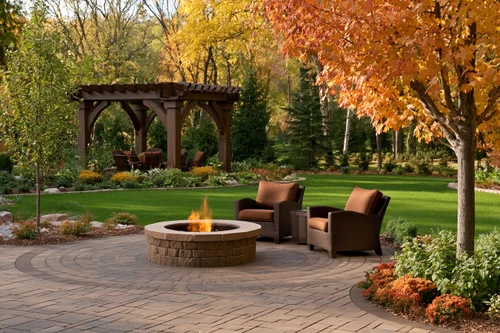
Fall Fire Pit Prep: Your Seasonal Checklist for Gas, Propane, and Wood-Burning Fire Features
Posted by Admin on 30th Sep 2026
Fall is when an outdoor fire feature goes from background furnishing to regular gathering spot. Before the first cool evening, give the pit a deliberate check while there is time to address a problem without guests waiting nearby. The right prep depends on the fuel and the exact product, but the basic sequence is the same: clear the site, inspect what is visible, follow the owner's manual for cleaning, and test the feature before you rely on it.
Before Your First Fire This Fall
- Check local conditions and rules. Review current burn restrictions and weather conditions before using an open wood fire. Local requirements can differ substantially, and wind or dry conditions may make use inappropriate.
- Clear the immediate area. Remove leaves, needles, loose mulch, and other combustible debris from around the fire feature. Reassess nearby plants, furniture, overhangs, and trip hazards that may have changed since summer.
- Inspect only what is safe to inspect. Look for visible damage, corrosion, loose hardware, blocked ventilation, damaged screens, or wet debris. Do not modify or repair a fuel-gas system yourself.
- Use the product manual for cleaning and media placement. Burner ports, ignition components, drain paths, and approved fire media are product-specific. Wait until the feature is completely cool, then follow the manufacturer's instructions.
- Run a test before the first gathering. Test the fire feature on a calm day, with an adult present and the required safety equipment nearby. Stop and arrange service if operation differs from the manufacturer's normal flame, ignition, or shutdown behavior.
Important: A fire pit's installation manual and local rules take precedence over a general checklist. For wood-burning fire pits, the National Fire Protection Association's outdoor-fire guidance recommends checking with the local fire department or municipality, avoiding burning on windy and dry days, keeping combustibles away, and supervising the fire until it is completely out.
For any fuel-gas fire feature, keep homeowner tasks limited to a cold visual inspection, cleaning expressly allowed by the manual, and normal operation. If the issue involves piping, fittings, valves, regulators, flex lines, an internal ignition component, or an unfamiliar flame pattern, stop and contact a qualified fuel-gas or propane technician. Do not tighten fittings, bend or flex lines, replace regulators, disassemble ignition components, pressure-test the system, or substitute parts yourself.
Stop and Arrange Service When You Notice
- Gas odor, hissing, a visible gas cloud, or flame where it should not be.
- A damaged cylinder, regulator, hose, connector, burner, or ignition component.
- Soot, a new abnormal flame pattern, or operation that differs from the manual.
- Repeated ignition failure or a control that does not operate normally.
If a gas leak is suspected, move away, avoid creating sparks or flames, and contact emergency services or the fuel supplier from a safe location. Do not operate electrical switches or keep attempting to light the appliance.
Natural Gas Fire Pit Prep
Natural gas fire features do not have a portable cylinder to exchange, but they still need a seasonal look-over. Start with the appliance turned off and fully cool. Clear leaves and loose debris from accessible surfaces near the burner area, control compartment, drain path, and ventilation openings only as the manual allows, without disassembling or altering the gas system. Look for visible damage to the burner, ignition components, flex line, fittings, enclosure, or surrounding finish. Treat the flex line as visual-only: do not bend, pull, move, or otherwise test it by hand.
Stay on the visual-inspection side of the line. Do not adjust gas fittings, test or repair piping, modify burners, or troubleshoot ignition beyond the procedure expressly provided in the owner's manual. If you smell gas, hear hissing, see damage, or notice an abnormal flame pattern, do not light the fire pit. Leave the area if a leak is suspected and contact the appropriate fuel-gas professional, supplier, or emergency service.
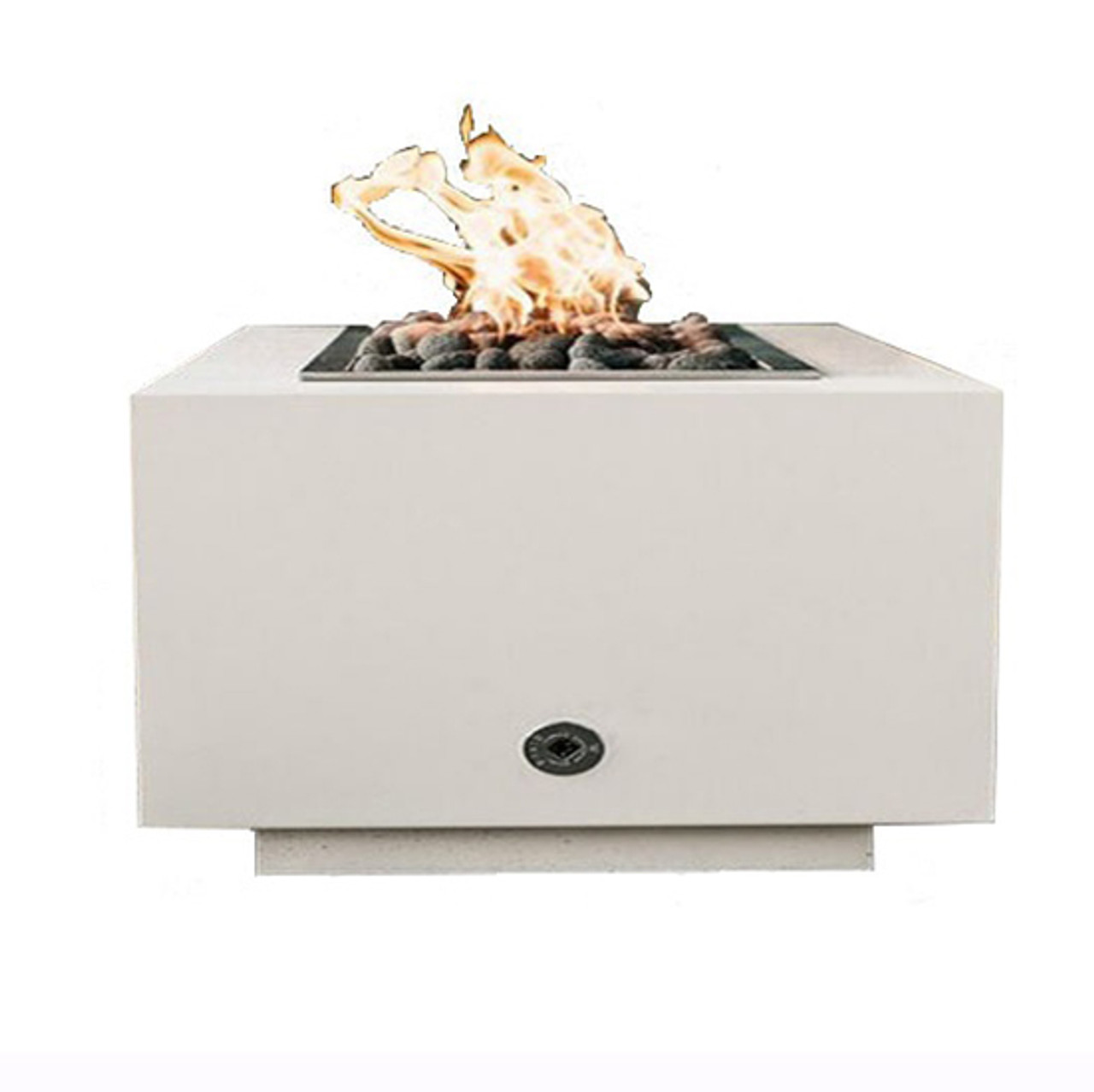
Yard Couture's Square Gas Fire Pit is offered with a natural-gas configuration; the photo below shows that option with a match-lit kit. Fuel type, ignition, media, and maintenance requirements must be checked against the exact configuration and its manual.
Burner, Ignition, and Fire Media
Gas fire pits can collect leaves, dust, insects, and moisture around the burner area over an unused season. Once the unit is cool, use the manufacturer's maintenance instructions to check that approved fire media is positioned correctly and that the burner area, vents, and drainage route are clear. Look for visible cobwebs or insect activity near accessible openings, but do not disassemble the burner or insert tools into components unless the manual expressly directs it. Avoid improvising with cleaners, replacement media, or burner components. The parts must match the fuel type, ignition system, burner, and enclosure design.
Burners, burner kits, and ignition components are fuel-specific safety parts. If a technician determines that one needs replacement, have that technician confirm the correct component and installation for the existing fuel supply, ignition system, enclosure, and ventilation design. A part that fits the opening is not necessarily appropriate for the fire feature.
Test Before You Need It
Run the first ignition without guests present. Follow the lighting sequence in the owner's manual, observe the flame from a safe position, and make sure the control and shutoff behavior match the product's normal operation. An irregular flame, repeated ignition failure, soot, unusual odor, or a new sound is a service issue, not a cue to keep relighting or make a DIY adjustment.
Propane Fire Pit Prep
For propane, the appliance and the cylinder both deserve attention. Check the cylinder, regulator, hose, and accessible connection for visible damage or deterioration. Keep the cylinder upright and secure, and do not use a cylinder that is damaged or has been exposed to fire. Follow the appliance and propane supplier instructions for cylinder qualification, exchange, or refilling; requirements can vary by location and cylinder type.
Cooler weather can make the first test especially worthwhile. Fuel level, ambient temperature, regulator condition, appliance maintenance, and the installation can all affect performance. Do not try to warm a cylinder, alter the regulator, or diagnose a weak flame by modifying the system. If the fire pit does not operate normally, stop using it and arrange qualified service.
Connection and Leak-Safety Boundaries
Before the first seasonal use and whenever a portable cylinder is connected, follow the leak-check procedure in the appliance manual and the cylinder supplier's instructions. A consumer-level soap-and-water check may be appropriate only when the manual expressly permits it for the accessible cylinder connection; any procedure involving pressure testing, regulators, fixed piping, or replacement parts belongs to a qualified technician. The Propane Education & Research Council's portable-cylinder safety guide explains leak indicators, upright storage, and when a professional inspection is required. If propane odor, hissing gas, a visible cloud, or flame at the cylinder suggests a leak, move away, avoid ignition sources, and contact emergency services or the propane supplier from a safe location.
Hidden Tank Compartments
A concealed cylinder compartment needs to remain clear and ventilated as designed. Remove loose leaves or debris only after the fire pit is off and cool; do not block openings, alter the base, or pack the compartment with accessories. Confirm operating, cylinder, and conversion requirements on the individual product page before purchasing or changing any propane configuration.
The Propane Fire Table with Hidden Tank is an example of a model designed around a concealed pullout drawer for a standard 20-pound propane cylinder. Follow its specific instructions for cylinder access, ventilation, and operation.

Wood-Burning Fire Pit Prep
Wood-burning prep begins with the bowl, the screen, and the site, not the first log. Wait until the pit and ashes are completely cool. Remove old ash as directed by the product manufacturer and local disposal requirements, then inspect the bowl, grate, legs, and screen for cracks, warping, loose hardware, or corrosion that affects safe use. The NFPA advises putting cooled ashes in a metal container with a tight-fitting lid away from combustibles.
Use clean, dry, seasoned wood appropriate for the fire pit. Do not burn treated lumber, painted material, construction debris, plastics, or household waste. Keep a garden hose, a bucket of water, or another locally appropriate means of extinguishing an outdoor wood fire ready. Supervise the fire and do not leave it until it is fully out. A spark screen can help contain embers, but it does not replace appropriate siting, supervision, or local compliance.
The Barrel Wood Burning Fire Pit is one current wood-only example with an internal drainage grate. Its hinged screen is an optional upgrade, not a standard part of the fire pit shown below.

Inspect the Screen Before Lighting
Check that the mesh is intact, the frame is stable, and handles and hinges operate as intended when the unit is cool. A screen that is bent, torn, unstable, or no longer fits the fire opening should be replaced rather than relied on for another season. Yard Couture's fire pit screens and lids collection includes options for different openings; confirm the fit and instructions for the individual accessory.
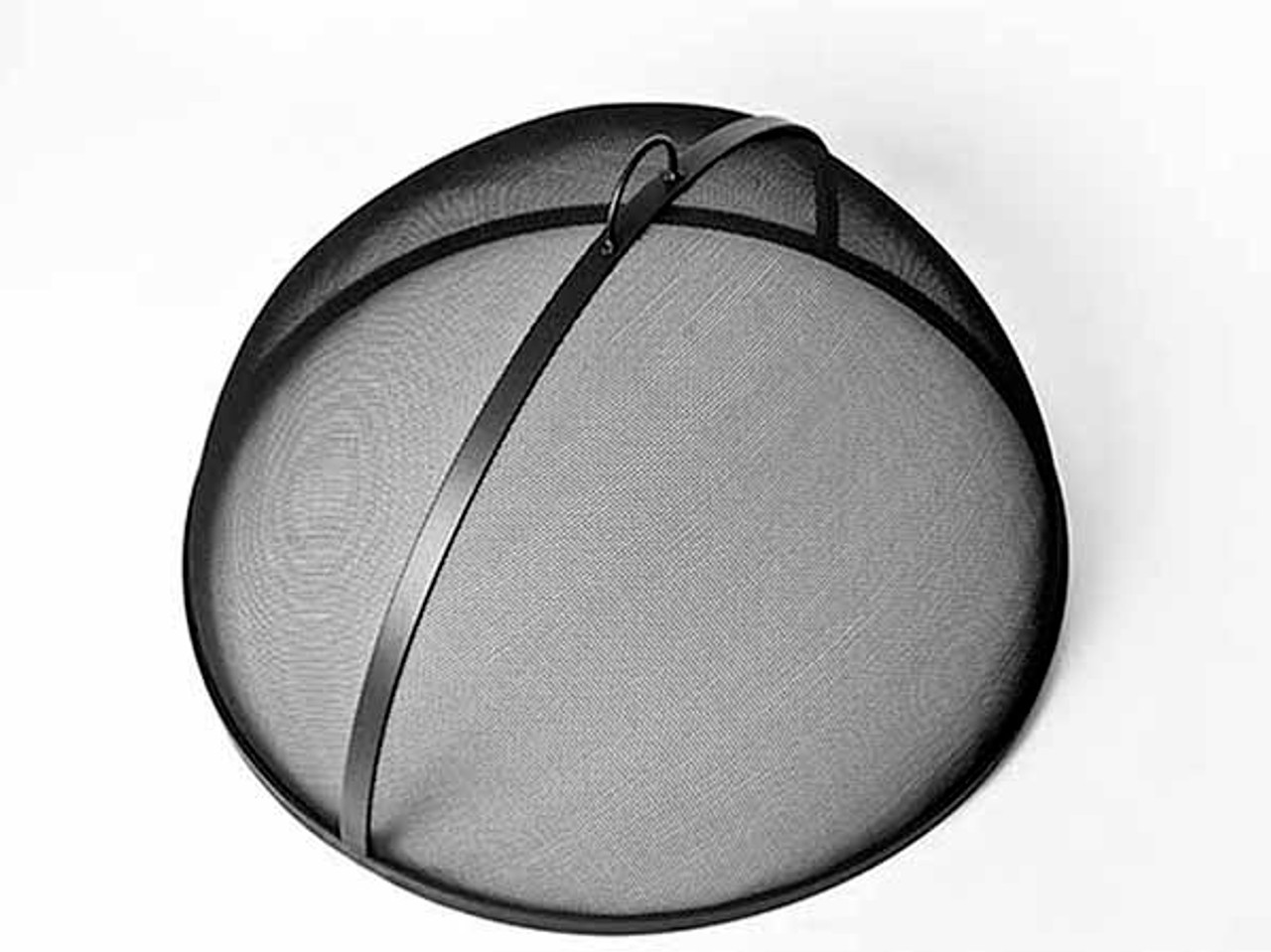
For a round wood-burning pit, the Dome Fire Pit Spark Screen is available in several diameters and material options. Measure the opening as the product page directs before ordering; a screen only helps contain embers when it fits correctly.
Care for Fire Media and the Finish
Gas Fire Media
Fire glass, lava rock, and ceramic logs are not interchangeable decorations. Use only media approved for your burner and follow the manufacturer's instructions for removal, cleaning, depth, and placement. At fall prep, look for debris, crumbling material, cracked logs, or media that has shifted into an area where it could affect ignition or flame distribution. If replacement is needed, confirm compatibility with the fire-pit manufacturer or a qualified technician before adding material to the burner pan.
Corten, Powder-Coated Metal, Stainless Steel, and GFRC
Use the finish-specific care instructions for the exact fire feature. New Corten or other natural-rust finishes may produce rust-colored runoff when exposed to rain, condensation, or irrigation. Keep leaves and wet debris from sitting against the surface, and plan drainage away from light or porous hardscape. Yard Couture's guide to protecting hardscape from Corten runoff explains why surface type and water flow matter; consult the fire-pit manufacturer for finish-specific care and warranty guidance.
For powder-coated metal, stainless steel, or GFRC concrete, avoid abrasive methods and use only the cleaner and seasonal-care procedure recommended by the manufacturer. Check for finish damage, cracks, pooling water, and blocked drains. Do not apply a coating, sealer, cleaner, or rust treatment unless the fire-feature manufacturer confirms that it is compatible with the product and its warranty.
Lid, Snuffer, or Canvas Cover?
These accessories solve different problems. A screen is designed to help contain sparks from a compatible wood-burning fire. A snuffer lid may be designed for a particular wood-burning pit, but it must be used exactly as its manufacturer directs and does not change the need to ensure the fire is fully extinguished and the feature is cool. A rigid burner lid or cover can keep debris out between uses when the product allows it. A fitted canvas cover protects the exterior from weather and debris during periods of non-use.
Do not treat a decorative lid as a snuffer: the Yard Couture Rectangular Aluminum Fire Pit Lid, for example, is for covering a pit when not in use, and its product page specifically says not to use it to snuff a wood fire. Never put a cover on an operating or hot fire feature. The The Outdoor Plus Round Fire Pit Cover is a canvas option for round gas or wood-burning fire pits; measure before choosing a size. You can also browse Yard Couture's canvas covers for other shapes.
Make the First Fall Fire a Test, Not a Troubleshooting Session
A good first-fire check is short and unhurried: confirm the site is clear, use the correct fuel and approved media, follow the owner's manual, and stop at the first sign that the fire feature is not operating normally. This catches simple debris and cover issues early while preserving the boundary between routine seasonal care and fuel-gas service.
If you need a screen, cover, burner component, or accessory for an existing feature, explore Yard Couture's current fire pit accessories. For custom sizing or help identifying an accessory, contact Yard Couture with the fire pit's make, fuel type, opening dimensions, and a few photos of the installation.
Product availability, images, materials, and options can change. Confirm compatibility and current specifications on the individual product page and in the manufacturer's instructions before ordering or use.